
Results for "Patent infringement"
Subscribe to Results for "Patent infringement"'s Posts

Beware Equitable Doctrine of Issue Preclusion in Multiparty, Multivenue Patent Campaigns

Addressing for the first time whether an invalidity order merges with a voluntary dismissal for purposes of finality, the US Court of Appeals for the Federal Circuit held that an interlocutory order merges with the final dismissal, rendering the interlocutory order final for purposes of issue preclusion. Koss Corp. v. Bose Corp., Case No. 22-2090 (Fed. Cir. July 19, 2024) (Hughes, Stoll, Cunningham, JJ.). As a consequence, the Federal Circuit found that the patent owner’s appeal from an adverse decision in an inter partes review (IPR) was moot under the doctrine of nonmutual collateral estoppel.

In July 2020, Koss filed a patent infringement lawsuit against Bose in the Western District of Texas, asserting three patents whose common specification discloses a “wireless earphone that communicates with a digital-audio source, such as an iPod, over an ad hoc wireless network like Bluetooth.” The same day, Koss asserted the same patents against Plantronics. Bose filed a motion challenging venue and also petitioned for inter partes review (IPR) of the three patents. Later in 2020, Bose filed a declaratory judgment action seeking a declaration of noninfringement in the District of Massachusetts on the three patents Koss asserted against Bose in the Texas litigation. The Massachusetts litigation was stayed pending the resolution of the venue motions in the Texas case.

In 2021, the Texas court dismissed Koss’s complaint against Bose for improper venue. Koss then asserted a counterclaim of infringement of the same three patents in the Massachusetts litigation. The Massachusetts court again stayed the litigation pending the resolution of the IPRs, which (by that time) the Patent Trial & Appeal Board had instituted. Meanwhile, Koss’s case against Plantronics was transferred to the Northern District of California, and Plantronics moved to dismiss the complaint on the ground that all the asserted claims (which included all the claims asserted against Bose) were invalid under 35 U.S.C. § 101. The California court granted Plantronics’s motion, rendering all the asserted claims invalid. However, that order did not finally dispose of the case.

Koss then moved for leave to amend its complaint, which the California district court granted. In the amended complaint, Koss asserted two additional patents. Plantronics moved to dismiss the asserted claims in those patents as invalid under § 101. The parties fully briefed Plantronics’s motion, but before the district court issued a decision on the merits of that motion, Koss voluntarily stipulated to dismissal with prejudice, disposing of the lawsuit in its entirety. Koss did not ask the district court to vacate its earlier order finding certain claims invalid under § 101. The California district court then issued an order dismissing the case with prejudice. The deadline for Koss to appeal the judgment came and went – Koss did not appeal.

Arguing that the patents had been finally adjudicated invalid in the Plantronics litigation, Bose moved to dismiss Koss’s appeal from the Board in the IPR proceedings as moot. Koss opposed the motion, arguing that its amended complaint rendered the invalidity decision on the prior complaint non-final because the [...]

Continue Reading


read more
New Arguments Yield Same Unpatentability Outcome

On remand from the US Court of Appeals for the Federal Circuit in connection with inter partes review (IPR) proceedings, the Patent Trial & Appeal Board considered the petitioner’s reply arguments and evidence regarding the claim constructions that were first proposed in the patent owner’s response but again found that the claims were not unpatentable. Axonics, Inc. v. Medtronic, Inc., IPR2020-00712; -00680 (May 30, 2024) (Tartal, Jeschke, Dougal, APJ)

Axonics filed IPR petitions challenging two patents owned by Medtronic that are directed to the transcutaneous charging of implanted medical devices. In its petitions, Axonics did not propose any express claim constructions. In its preliminary response, Medtronic agreed that claim construction was not necessary. In its patent owner response, however, Medtronic – for the first time – advanced a new claim construction that differed from the interpretation of the relevant claims implied in Axonics’s claim charts. Axonics defended its own implicit construction but also offered new arguments and evidence that the prior art anticipated the patents even under the alternative construction. The Board adopted Medtronic’s new claim construction but refused to consider Axonics’s new arguments and evidence because they were first presented in the reply. The Board then found that Axonics failed to show by a preponderance of the evidence that the challenged claims were unpatentable. Axonics appealed.

Axonics did not dispute the new claim construction first introduced by Medtronic in its response and adopted by the Board; it argued only that the Board erred in refusing to consider its reply arguments and evidence under the new construction. The Federal Circuit agreed, concluding that in such a situation, “a petitioner must be given the opportunity in its reply to argue and present evidence of anticipation or obviousness under the new construction, at least where it relies on the same embodiments for each invalidity ground as were relied on in the petition.” The Court remanded for the Board to consider Axonics’s new arguments.

On remand, the Board considered Axonics’s new arguments and evidence that the challenged claims were unpatentable over the prior art under the new construction. It also considered Medtronic’s amended sur-reply. The Board again determined that none of the challenged claims were unpatentable. In its analysis, the Board pointed out that some of Axonics’s new arguments and evidence regarding what the prior art disclosed in light of the new claim construction were inconsistent with the arguments and evidence it initially offered in its petition. In particular, the Board observed that the declaration testimony of Axonics’s expert regarding the prior art, on which Axonics relied in its petition, did not support the new claim construction, even considering the expert’s supplemental declaration. The Board also rejected Axonics’s attempts in its post-remand brief to discredit Medtronic’s arguments as “untimely and wrong,” “incorrect” and “contradictory of the positions on infringement it has taken in district court.” Citing the Federal Circuit, the Board pointed out that in an IPR, the burden of persuasion to prove unpatentability by a preponderance of the evidence [...]

Continue Reading


read more

Section 337 Doesn’t Require Article III Standing for Claimant but Claimant Must Be “Patentee”

Addressing an initial determination by an administrative law judge (ALJ) granting summary determination and terminating a Section 337 investigation for lack of Article III standing, the US International Trade Commission reversed and held that Section 337 does not require claimants to have Article III standing. Certain Active Matrix Organic Light-Emitting Diode Display Panels and Modules for Mobile Devices, and Components Thereof, Inv. No. 337-TA-1351, Commission Opinion (May 15, 2024).

In late 2022, Samsung Display filed a complaint seeking to institute a Section 337 investigation based on its infringement allegations regarding four patents and seeking an exclusion order against replacement displays sold by various companies. In late 2023, on the eve of the evidentiary hearing, the ALJ granted the respondents’ motion for summary determination that the complainant lacked constitutional standing because Samsung Display had granted its parent company, Samsung Electronics Co., an implied license to the asserted patents with an unrestricted right to sublicense. Samsung Display petitioned for Commission review. On review, the Commission reversed.

The Commission first noted that because it’s an administrative tribunal and not an Article III court, the “case or controversy” requirement does not apply to parties before it and standing is instead based on its governing statute. The Commission acknowledged its previous decisions where it had applied a constitutional standing requirement and expressly overruled those decisions. It further noted that its statute does not include the “patentee” requirement of 35 U.S.C. § 281 that applies to plaintiffs in district court actions but reiterated its long-standing practice of requiring a complainant be the owner or exclusive licensee of the asserted patent(s) at the time of filing the complaint.

The Commission held that there were genuine issues of material fact as to whether Samsung Display was a “patentee” when it filed the complaint. The Commission found there was an open question as to whether Samsung Electronics actually had a right to sublicense without Samsung Display’s explicit or implicit authorization. The Commission thus remanded the investigation to the ALJ to conduct further proceedings to develop the factual record.


read more

Prime Delivery: Amazon Program Now Offers Personal Jurisdiction to Patent Holders

Addressing the issue of personal jurisdiction in the context of a declaratory judgment case involving a program for resolving patent infringement claims, the US Court of Appeals for the Federal Circuit concluded that a patent owner has personal jurisdiction in the forum of an alleged infringer when it files a program claim against the alleged infringer. SnapRays, dba SnapPower v. Lighting Defense Group, Case No. 23-1184 (Fed. Cir. May 2, 2024) (Moore, CJ. Lourie, Dyk, JJ.)

The Amazon Patent Evaluation Express (APEX) program helps resolve patent infringement claims against sellers on Amazon. Under APEX, a patent owner submits an APEX Agreement to Amazon that identifies the allegedly infringed patent claim and the Amazon listings with the alleged infringing products. Amazon then sends this APEX Agreement to the seller, who can do one of the following to avoid removal of their accused listings:

  • Opt into APEX and let a third party determine whether their product likely infringes
  • Resolve the claim directly with the patent owner
  • File a lawsuit for declaratory judgment of noninfringement. If the seller does nothing, its listings are automatically removed from Amazon within three weeks of receipt of the APEX Agreement.

Lighting Defense Group (LDG), a Delaware company whose principal place of business is in Arizona, submitted an APEX Agreement alleging that SnapPower’s Amazon products (electrical outlet covers with integrated technology) infringed one of its patents. SnapPower, a Utah company whose principal place of business is in Utah, then filed a declaratory judgment action against LDG in Utah. LDG then filed a motion to dismiss for lack of personal jurisdiction. The district court granted the motion, finding that SnapPower did not demonstrate that LDG purposefully directed activities at SnapPower in Utah and that there was no evidence that LDG reached out to Utah other than through responses to SnapPower’s communications. SnapPower appealed.

The Federal Circuit reversed, finding that LDG was subject to personal jurisdiction under the Court’s three-prong test because (1) LDG purposefully directed its activities at SnapPower in Utah, (2) LDG’s submission of the APEX Agreement was directed to SnapPower in Utah and aimed to affect activities in Utah and (3) it would not be unreasonable to find personal jurisdiction over LDG in Utah.

In assessing the first prong, the Federal Circuit found that LDG knew, via APEX’s terms, that Amazon would notify SnapPower of the APEX Agreement and that the options available to SnapPower included a claim for declaratory judgment. Further, the Court found that the APEX Agreement had more power than cease and desist letters because of the automatic removal of the listings after three weeks, which would affect sales and activities in Utah.

In assessing the second prong, the Federal Circuit found that personal jurisdiction comported with due process because LDG’s actions aimed to affect marketing, sales and other activities in Utah and because the suit arose out of LDG’s activities in the forum.

In assessing the final prong, the Federal Circuit rejected LDG’s argument that allowing personal jurisdiction would “open the [...]

Continue Reading


read more

Stud-y Harder: Domestic Industry Must Be Established for Each Asserted Patent

Addressing a final determination by the US International Trade Commission of no violation of § 337, the US Court of Appeals for the Federal Circuit affirmed that the complainant had not satisfied the economic prong of the domestic industry requirement because it relied on aggregated evidence of investments across different products protected by different patents. Zircon Corp. v. ITC, Case No. 22-1649 (Fed. Cir. May 8, 2024) (Lourie, Bryson, Stark, JJ.)

In 2020, Zircon filed a complaint seeking a § 337 investigation based on alleged infringement of four patents covering electronic stud finders. The Commission instituted an investigation, naming Stanley Black & Decker as the respondent. Zircon withdrew one patent during the investigation and, in late 2021, the administrative law judge (ALJ) issued an initial determination finding no violation of § 337. The ALJ found some claims of one of the three patents to be valid and infringed but held that Zircon had failed to establish the economic prong of the domestic industry requirement because it had aggregated its investments across all 53 of its practicing products, of which only 14 practiced all three patents. On review, the Commission affirmed the finding of no violation, holding that all claims were either invalid or not infringed. The Commission also affirmed the domestic industry finding, holding that the aggregation prevented it from evaluating the significance of Zircon’s investments with respect to each of the three asserted patents. Zircon appealed.

The Federal Circuit affirmed on the basis that Zircon failed to meet the second prong of the domestic industry requirement. The Court explained that where different groups of products practice different patents, the complainant must separately establish a domestic industry for each group of products. The Court agreed with Zircon that such a showing might not necessarily require breaking out investments on a per-patent basis but concluded that the complainant must ultimately show that the domestic industry requirement is met for each asserted patent. Because the Federal Circuit upheld the finding of no domestic industry, it found it unnecessary to reach the infringement and invalidity rulings.


read more

Patent Venue: VENUE Act Would Expand Scope of Venue

As part of proposed legislation intended to address several procedural issues related to judicial proceedings, a recent section titled the Venue Equity and Non-Uniformity Elimination Act of 2024 (VENUE Act) seeks to expand the number of jurisdictions in which a patent infringement suit can be brought under 28 U.S.C. § 1404(b). The bill, S 4095, is almost identical to a 2016 bill introduced by then-Senator Jeff Flake.

The VENUE Act seeks to legislatively overrule the 2017 Supreme Court ruling in TC Heartland v. Kraft Foods Group Brands by significantly broadening the number of venues in which a suit can be brought. Under the current state of the law, venue for a patent suit is appropriate under 28 U.S.C. § 1400(b) only where a defendant resides (i.e., for a business, its state of incorporation) or where the defendant has infringed the patent and maintains a regular and established place of business. In the wake of TC Heartland, venue has become a contested preliminary issue in many patent litigations.

In addition to the already established venues for patent suits, the VENUE Act would include jurisdictions where an inventor conducted research or development underlying the patent-in-suit. It would also allow venue where the defendant business conducted research and development for the asserted patent, manufactures a product or performs a manufacturing process purportedly embodied by the asserted patent. The VENUE Act would limit a “regular and established place of business” to a “physical facility,” excluding the homes of a business’s teleworking employees.

Procedurally, the VENUE Act would codify – and potentially strengthen – the existing practice of challenging district court venue determinations by mandamus petitions. By statute, a court’s “clearly and indisputably erroneous” denial of a venue transfer or dismissal motion would constitute “irremediable interim harm,” which would have the effect of requiring the US Court of Appeals for the Federal Circuit to grant such petitions when warranted.

If enacted, the VENUE Act would create new statutory interpretation issues in its significant expansion of the number of districts in which venue may be sought. At the same time, however, the expansion might be significant enough that venue challenges would return to the rarity they once enjoyed.


read more

ITC Shines Light on DI: Complainant Can’t Aggregate Investments Across Patents, Prongs

Addressing a determination by its chief administrative law judge (CALJ) finding a violation of § 337, the US International Trade Commission reversed and held that the complainant had not satisfied the economic prong of the domestic industry (DI) requirement by aggregating its investment across multiple asserted patents. Certain Replacement Automotive Lamps (II), Case No. 337-TA-1292 (USITC Mar. 22, 2024).

In late 2021, Hyundai filed a complaint seeking an investigation under 19 U.S.C. § 337 based on alleged infringement of 21 design patents, each covering a different automotive headlamp or taillamp. In response, two of the proposed respondents filed a request seeking early disposition of the economic prong of the domestic industry under the Commission’s 100-day program. Hyundai filed a response opposing the 100-day program request based on the complexity of the issues. The Commission instituted the investigation and denied the 100-day program request, but when setting the procedural schedule, the CALJ scheduled an early evidentiary hearing on the economic prong of the domestic industry pursuant to the Commission’s pilot program for interim initial determinations. Following that initial hearing, the CALJ issued an interim initial determination finding that Hyundai had satisfied the economic prong of the domestic industry requirement. After the full evidentiary hearing, the CALJ issued a final initial determination finding a violation of § 337 by the respondents based on infringement of all asserted patents. The Commission decided to review both the initial and final determinations.

On review, the Commission reversed the finding that the complainant had satisfied the economic prong of the domestic industry requirement. As the Commission explained, where DI products do not have overlapping protection across common asserted patents, a complainant must treat each product as requiring a separate DI showing. The Commission cannot aggregate investments in articles covered by one patent with investments in articles only covered by a different patent. Here, because each DI product practiced only one of the asserted design patents, to satisfy the economic prong Hyundai was required to demonstrate that the investments in each product were independently significant. The Commission also held that investments in plant and equipment (§ 1337(a)(3)(A)) cannot be combined with employment of labor or capital (§ 1337(a)(3)(B)) and concluded that Hyundai had mistakenly aggregated its investments from both prongs.

Commissioner Schmidtlein filed an opinion concurring with the outcome but declining to join the majority opinion based on her view that it went beyond what was necessary to dispose of the investigation.


read more

Patenting Web Advertising? Ask Alice, I Think She’ll Know

In a wide-ranging opinion, the US Court of Appeals for the Federal Circuit affirmed the district court’s grant of summary judgment of invalidity for lack of patent eligible subject matter under 35 U.S.C. § 101 with respect to claims directed to web-based advertising. Chewy, Inc. v. International Business Machines, Corp., Case No. 22-1756 (Fed. Cir. March 5, 2024) (Moore, Stoll, Cunningham, JJ.)

Chewy filed suit against International Business Machines (IBM) seeking a declaration that Chewy’s website did not infringe multiple patents related to web-based advertising. IBM responded by filing infringement counterclaims. After claim construction and discovery, the district court granted Chewy’s motions for summary judgment of invalidity for lack of patent eligible subject matter with regard to the asserted claims of one patent and noninfringement of the asserted claims of a second patent.

The claims of the first patent relate to providing a targeted advertisement from an “information repository” to a user based on the user’s internet search. In affirming the district court, the Federal Circuit first determined that, under Alice step 1, “[t]he claims broadly recite correlating advertisements with search results using a generic process.” The Court noted that the claims “merely recite the concept of identifying advertisements based on search results, without any specificity as to how this is accomplished,” and are directed to “the abstract idea of identifying advertisements based on search results.”

Turning to Alice step 2, the Federal Circuit found that the claims used a generic database and conventional processing steps, and “claimed use of a conventional repository for storing advertisements and associated search results in a well-known way.” Because “the claims recite the generic process for obtaining search results from a search query and using the search results to identify advertisements,” they failed under Alice step 2 and did not claim patent eligible subject matter under § 101.

Regarding the second asserted patent, the district court construed the claim term “selectively storing advertising objects at a store established at the reception system” as requiring the “advertising objects” to be “pre-fetched” and retrieved before the user requested a page on a website. Because it was undisputed that “Chewy retrieves advertisements in response to a user requesting a page” and not before, the district court ruled that Chewy’s website did not meet this claim limitation. Looking to the intrinsic claim construction evidence, the Federal Circuit held that the district court’s claim construction was amply supported by the specification and prosecution history and affirmed the district court’s grant of summary judgment of noninfringement. Of note, the Court explained that the specification made multiple references to pre-fetching as being part “of the present invention” and therefore limited the scope of the claims.

With respect to one asserted claim of the second patent, which did not include the limitation at issue, the district court found that Chewy’s website did not practice the limitation of “establishing characterizations for respective users based on the compiled data” because “the record undisputedly showed they deliver advertisements based on the page the user is currently viewing, [...]

Continue Reading


read more

Still Exceptional: Fee-Shift Appropriate in View of Noninfringement Stipulation

In a split decision, the US Court of Appeals for the Federal Circuit affirmed a district court’s award of more than $5 million in attorneys’ fees, finding that the district court did not abuse its discretion in finding the underlying case “exceptional” under 35 U.S.C. § 285 or in calculating the total fees awarded. In re PersonalWeb Tech., Case No. 21-1858 (Fed. Cir. Nov. 3, 2023) (Reyna, Lourie, JJ.) (Dyk, J., dissenting).

Under 35 U.S.C. § 285, a “court in exceptional cases may award reasonable attorney fees to the prevailing party.” In Octane Fitness (2014), the Supreme Court of the United States held that an exceptional case is “simply one that stands out from others with respect to the substantive strength of a party’s litigating position (considering both the governing law and the facts of the case) or the unreasonable manner in which the case was litigated,” and the court considers the totality of the circumstances in making this determination.

PersonalWeb’s litigation positions at issue date back to 2011, when PersonalWeb first asserted five patents against an e-commerce company. After an unfavorable claim construction ruling, PersonalWeb stipulated to dismiss the action, and the district court entered the dismissal with prejudice.

In 2018, PersonalWeb asserted the patents against customers of the e-commerce company. The e-commerce company intervened and filed a new action against PersonalWeb seeking a declaratory judgment to bar the infringement actions against the customers based on the 2011 dismissal. Some of the cases proceeded while others were stayed. The district court granted summary judgment against PersonalWeb on claims directed to two allegedly infringing products for two separate reasons: because of the Kessler doctrine and claim preclusion, and because PersonalWeb conceded that it could not prevail after an unfavorable claim construction order.

The district court also entered an award of attorneys’ fees and costs against PersonalWeb, finding the case to be “exceptional” for the following reasons:

  • The infringement claims were “objectively baseless and not reasonable when brought because they were barred due to a final judgment in the [2011 action].”
  • PersonalWeb frequently changed its infringement positions to overcome the hurdle of the day.
  • PersonalWeb unnecessarily prolonged this litigation after claim construction foreclosed its infringement theories.
  • PersonalWeb’s conduct and positions regarding the customer cases were unreasonable.
  • PersonalWeb submitted declarations that it should have known were inaccurate.

The district court calculated the attorneys’ fees to be more than $5 million and costs to be more than $200,000. PersonalWeb appealed.

PersonalWeb argued that the district court erred in awarding fees and, even if fees were warranted, the court erred in assessing almost $2 million of the $5 million award. The Federal Circuit found that the district court did not abuse its discretion in any of its findings related to the fee grant, agreeing with the district court’s application of the Kessler doctrine. In Kessler, the Supreme Court ruled that after a final judgment of noninfringement, follow-up suits by the same patentee over the same non-infringing product against customers of the party [...]

Continue Reading


read more

Chilly Adventures: Design Patent Prior Art Comparison Applies to Article of Manufacture

Addressing a matter of first impression concerning the scope of prior art relevant to a design patent infringement analysis, the US Court of Appeals for the Federal Circuit concluded that “to qualify as comparison prior art, the prior-art design must be applied to the article of manufacture identified in the claim.” Columbia Sportswear North America, Inc. v. Seirus Innovative Accessories, Inc., Case Nos. 21-2299; -2338 (Fed. Cir. Sept. 15, 2023) (Prost, Reyna, Hughes, JJ.)

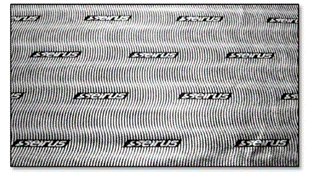
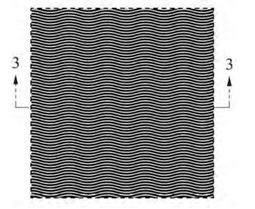
Columbia owns a design patent that covers an ornamental design of a heat reflective material. Seirus markets and sells products (e.g., gloves) made with material that it calls HeatWave. An image of Columbia’s patented design and Seirus’s HeatWave material appear below:

Columbia Patented Design

Seirus HeatWave

Columbia sued Seirus for infringement. After the district court granted summary judgment of infringement, Seirus appealed to the Federal Circuit. The Court issued its decision in Columbia I, concluding that the district court improperly declined to consider the effect of Seirus’s logo in its infringement analysis and resolved certain issues that should have been left to the jury. The Court therefore vacated summary judgment and remanded for further proceedings.

On remand, the district court held a trial. Before trial, the district court limited admissible comparison prior art to “wave patterns of fabric,” declined to instruct the jury that “prior art” referred to prior designs of the claimed article of manufacture, and declined to instruct the jury that it did not need to find that any purchasers were deceived or that there was any actual or likelihood of confusion among consumers in the marketplace. Seirus was permitted to admit three prior art references that disclosed fabric, and Columbia was precluded from distinguishing the references by arguing that they did not disclose heat reflective material. The jury returned a verdict of noninfringement. Columbia appealed.

Among other things, Columbia challenged the exclusion of evidence and jury instructions concerning comparison prior art, and the jury instructions implicating Seirus’s logo.

The Federal Circuit began by discussing the appropriate prior art comparison in the context of design patent infringement. Citing its 2008 en banc decision in Egyptian Goddess v. Swisa, the Court explained that under the ordinary-observer test governing design patent infringement, prior art can help highlight distinctions and similarities between the claims and the accused design. For instance, when a claimed design is close to a prior art design, small differences between the accused design and the claim design are likely to be important. Conversely, if an accused design copied a particular feature of the claimed design that departs from the prior art, the accused design is likely to be regarded as deceptively similar to the claimed design, and thus infringing.

The question of first impression before the Federal Circuit was the proper scope of comparison prior art that may be [...]

Continue Reading


read more

STAY CONNECTED

TOPICS

ARCHIVES