
Results for "Trademark Precedent"
Subscribe to Results for "Trademark Precedent"'s Posts

All rise: Here comes the real judge

The US Court of Appeals for the Federal Circuit sustained the Trademark Trial & Appeal Board’s refusal to register trademark applications (over oppositions) for two character marks and a design mark based on the Board’s finding of likelihood of confusion with the common law rights of a world-famous baseball player and major league baseball’s players association  as supported by substantial evidence and consistent with trademark law. Chisena v. Major League Baseball Players Ass’n, Case No. 23-2073 (Fed. Cir. Jan. 8, 2026) (Hughes, Freeman, Lourie, JJ.) (nonprecedential).

Michael Chisena, acting pro se, sought trademark registration for two word marks, ALL RISE and HERE COMES THE JUDGE, and a design mark featuring a baseball field with a superimposed scale of justice and judge’s gavel (pictured below) (Chisena marks) for use in connection with “clothing, namely t-shirts, shirts, shorts, pants, sweatshirts, sweatpants, jackets, jerseys, athletic uniforms, and caps.”
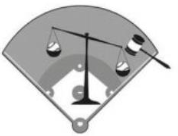
Source: Chisena v. Major League Baseball Players Ass’n, Case No. 23-2073 (Fed. Cir. Jan. 8, 2026), Slip Op at 2.

Chisena filed intent to use applications and alleged that the constructive use priority date for the word marks was July 14, 2017, and for the design mark it was October 12, 2017. The Major League Baseball Players Association (MLBPA) and Aaron Judge, a superstar Yankees outfielder and team captain (collectively, appellees), filed Notices of Opposition against registration of the marks, which the Board consolidated into a single proceeding.

Judge is a well-known baseball player whose rise to fame prompted the commercialization of judicial slogans and insignia in connection with his baseball career. The appellees alleged that the Chisena marks would likely cause confusion with their marks, which include ALL RISE and certain judicial symbols. They argued that they had common law trademark rights that predated Chisena’s alleged priority dates. The Board found that the appellees established priority against the Chisena marks and that there was a likelihood of confusion between the marks and therefore refused to register the Chisena marks. Chisena appealed.

The Federal Circuit found that the Board’s priority decisions were supported by substantial evidence that appellees’ marks were used in commerce prior to the Chisena marks’ priority date. The Court concluded that the priority dates for the Chisena marks were the constructive use filing dates since Chisena did not use the marks in commerce until after he filed the applications. The Court further relied on licensed products bearing judicial slogans, phrases, symbols, and personal indicia related to Judge used as early as June 2017 in holding that appellees’ common law trademark rights predated the Chisena marks’ priority dates.

Chisena argued that appellees did not adequately identify the specific marks at issue in their Notices of Opposition. The Federal Circuit agreed with the Board that the notices provided fair notice because they adequately claimed ownership of the marks that served as the basis for the opposition and the basis for appellees’ priority claims.

Chisena argued that the appellees’ [...]

Continue Reading


read more
Institution decisions off limits: Federal Circuit rejects mandamus petitions based on due process, “settled expectations”

The US Court of Appeals for the Federal Circuit denied mandamus relief to three petitioners after the United States Patent and Trademark Office (USPTO) denied inter partes review (IPR) institution. The Court explained that Congress insulated the Director’s discretion from judicial review by making IPR institution determinations final and nonappealable, and that 35 U.S.C. § 314(d) bars virtually all judicial oversight. In re Cambridge Industries USA Inc., Case No. 2026-101; In re Sandisk Technologies, Inc., Case No. 2025-152; In re HighLevel, Inc., Case No. 2025-148 (Fed. Cir. Dec. 9, 2025) (nonprecedential) (Prost, Chen Hughes, JJ.)

The Federal Circuit acknowledged that while “colorable constitutional claims” may present an exception to the no judicial review clause, no such claims were raised in these cases. The petitioners failed to identify the kind of property interests or retroactivity concerns that could support either a colorable due process claim or an alternative avenue for relief.

Settled expectations

The lead case, In re Cambridge Industries USA, addressed the USPTO’s use of the “settled expectations” factor as a basis for discretionary denial. The agency denied institution on two patents that had been in force for seven and nine years, respectively, concluding that the patent owner had developed “settled expectations” in those long-standing rights. The companion petition, In re Sandisk Tech., involved patents that had been in force for nine and 12 years, and the USPTO reached the same conclusion.

The Federal Circuit declined to disturb either decision. The Court held that the petitioners had not shown that the settled expectations factor exceeded the USPTO’s statutory authority or that the agency’s application of the factor was unreasonable. It also rejected the argument that the USPTO had effectively created a “maximum-patent-age cap” on institution. Emphasizing the narrow scope of mandamus review, the Court reiterated that it was not deciding whether the USPTO’s actions were correct or statutorily permissible, but only that the petitioners failed to establish a “clear and indisputable right” to relief in light of Congress’s limits on judicial review of institution decisions.

Efficiency

In HighLevel, a district court had already found the challenged patents ineligible under 35 U.S.C. § 101. The Patent Trial & Appeal Board nonetheless denied IPR institution, determining that instituting review would not be an efficient use of agency or party resources and that the “efficiency and integrity of the patent system” were best served by declining review. The USPTO denied Director review.

The Federal Circuit rejected HighLevel’s contention that this decision violated due process, holding that HighLevel’s “mere reliance on the PTO evaluating its petition without regard to efficiency concerns arising from parallel litigation” was insufficient to establish a colorable constitutional claim.


read more

USPTO Director to decide AIA petitions

The United States Patent and Trademark Office (USPTO) issued a memorandum on October 17, 2025, titled “Director Institution of AIA Trial Proceedings,” providing updated guidance to the Patent Trial & Appeal Board regarding the standards and procedures for instituting trial proceedings under the America Invents Act (AIA), including inter partes review (IPR) and post-grant review (PGR).

Since the AIA’s enactment in 2012, the Board’s trial proceedings have become a central mechanism for challenging the validity of issued patents. The institution phase, in which the Board decides whether to proceed with a trial, has been shaped by a series of precedential decisions and evolving USPTO policies, particularly regarding discretionary denials under 35 U.S.C. §§ 314(a) and 325(d).

The October 17, 2025, memorandum states that to “improve efficiency, consistency, and adherence to the statutory requirements for institution of trial, effective October 20, 2025, the Director will determine whether to institute trial for [IPR and PGR] proceedings.” If the Director determines that review is appropriate based on discretionary, merits-based, or other considerations, the USPTO will issue a summary notice granting institution for at least one challenged claim. If the Director determines review is not appropriate, the USPTO will issue a summary notice denying institution. For cases involving novel or complex issues, the Director may issue a detailed decision or refer the matter to one or more Board judges. A three-member Board panel will conduct all instituted reviews. The memorandum also notes that the USPTO has issued more than 580 prior decisions under interim processes that offer guidance on handling of discretionary factors.


read more

Oh brother: Draft settlement agreements carefully

The US Court of Appeals for the Eighth Circuit affirmed a district court judgment, finding that the plaintiff failed to sufficiently prove damages for its copyright claim, the jury instructions accurately applied the sophisticated consumer exception to initial-interest confusion, and the district court properly submitted ambiguous contract language to the jury for interpretation. Hoffmann Brothers Heating and Air Conditioning, Inc. v. Hoffmann Air Conditioning & Heating LLC, Case No. 24-1289 (8th Cir. Sept. 8, 2025) (Graza, Stras, Kobes, JJ.)

Brothers Tom and Robert Hoffmann were partners in Hoffmann Brothers. After Robert bought out Tom, they entered into a settlement agreement that included a four-year restriction barring Tom from using the name “Hoffmann” in connection with an HVAC business. After four years, Tom began using “Hoffmann Air Conditioning & Heating, LLC” (Hoffmann AC). Hoffmann AC’s advertising agency later mistakenly used pictures of Hoffmann Brothers. Hoffmann Brothers sued for trademark and copyright infringement. Hoffmann AC prevailed on some issues at summary judgment, and the jury reached a mixed verdict on the remaining claims. Both parties were denied attorneys’ fees, and Hoffmann Brothers appealed.

On appeal, the Eighth Circuit affirmed that Hoffmann Brothers did not sufficiently prove damages for its copyright claim based on Hoffmann AC’s use of its photographs. Because the photographs were unregistered works, Hoffmann Brothers was required to prove actual damages and/or additional profits of the infringer attributable to the infringement. Hoffmann Brothers’ only evidence of actual damages was Hoffmann AC’s monthly fee paid to its marketing agency. The Court found that using the monthly fee was too speculative because it did not reflect the benefit to Hoffmann AC or the harm to Hoffmann Brothers. For evidence of additional profits, Hoffmann Brothers’ expert report failed to link the use of the photographs to Hoffmann AC’s gross revenue. The Court explained that the Hoffmann Brothers could have linked additional profits attributable to the use of the photographs by, for example, demonstrating that:

  • Hoffmann AC gained customers because of the ads.
  • The photographs actually influenced purchasing decisions.
  • There was spike in monthly revenue that coincided with use of the photographs.

Regarding Hoffmann Brothers’ trademark claim, the jury found that the names were not so similar as to cause confusion. Hoffmann Brothers appealed, arguing that the district court erred in its jury instructions. The Eighth Circuit rejected the argument, finding the instructions fair and legally adequate. The instruction was directed to the issue of initial-interest confusion (a concept not adopted by Missouri courts), which occurs when consumer confusion arises at the outset, even if no sale ultimately results. The Court explained that under Eighth Circuit precedent, a sophisticated consumer exception applies to this theory, meaning that consumers who exercise a high degree of care are less likely to be initially confused. Here, the district court instructed the jury to consider initial-interest confusion only if it found that Hoffmann Brothers’ customers were not sophisticated. While the Eighth Circuit acknowledged some hesitation about the assumption that sophisticated consumers are never susceptible to initial-interest [...]

Continue Reading


read more

Claims barred by laches: Prosecution delay doesn’t pay, nor does skipping evidence of concrete injury

The US Court of Appeals for the Federal Circuit affirmed a district court’s judgment for the US Patent & Trademark Office (PTO) on application of prosecution laches in an action under 35 USC § 145. The Federal Circuit also agreed that the district court lacked Article III jurisdiction over certain claims because the plaintiff failed to provide evidence of concrete injury when challenged after initial pleadings. Hyatt v. Stewart, Case Nos. 2018-2390; -2391; -2392; 2019-1049; -1038; -1039; -1070; 2024-1992; -1993; -1994; -1995 (Fed. Cir. Aug. 29, 2025) (Reyna, Wallach, Hughes, JJ.) (precedential).

Gilbert Hyatt filed four GATT bubble patent applications, all of which had claims rejected by the examiner. Hyatt appealed those rejections to the Patent Trial & Appeal Board, which affirmed various rejections of others. Following the Board decisions, Hyatt filed four separate actions in district court under 35 U.S.C. § 145, challenging the PTO rejections. In response, the PTO asserted prosecution laches as an affirmative defense and, in the alternative, invalidity, based on anticipation and lack of written description.

The district court initially ruled in Hyatt’s favor, finding that the PTO’s affirmative defenses failed with respect to the claims for which the Board affirmed the examiner’s rejection. The district court concluded that it lacked Article III jurisdiction over the remaining claims (those for which the Board reversed the examiner) because there was no final agency action as to those claims.

The PTO appealed, arguing that prosecution laches barred all of the claims or, in the alternative, that the claims were invalid. Hyatt cross-appealed, contending that prosecution laches did not apply in § 145 actions or that the district court abused its discretion in applying laches in these specific § 145 actions.

In an earlier appeal, Hyatt I, the Federal Circuit vacated the district court’s rulings on prosecution laches, holding that the district court applied the wrong standard for prosecution laches and had the burden of proving that Hyatt engaged in unreasonable and unexplained delay in prosecuting his applications and that the delay was prejudicial. The panel remanded the case held the issue of Article III jurisdiction in abeyance. On remand, the district court reversed course and found in favor of the PTO on prosecution laches, concluding that Hyatt had unreasonably delayed prosecution in a manner that prejudiced the agency.

Hyatt appealed. The Federal Circuit consolidated the appeals with the earlier stayed jurisdictional issues. The Federal Circuit affirmed the district court’s application of prosecution laches, finding no clear error in its determination that Hyatt’s conduct met the standard for delay and prejudice. The Federal Circuit also agreed that the district court lacked Article III jurisdiction over claims that had not been finally rejected by the PTO, reinforcing that § 145 actions may only proceed where there is a final agency determination resulting in a justiciable controversy.

On the issue of prosecution laches, the Federal Circuit explained that it had already considered and rejected Hyatt’s argument that prosecution laches is unavailable in a § 145 action in Hyatt I, and [...]

Continue Reading


read more

Kissing cousins? SUNKIST and KIST deemed confusingly similar

The US Court of Appeals for the Federal Circuit reversed a Trademark Trial & Appeal Board decision, concluding that there was a likelihood of confusion between the marks KIST and SUNKIST when used in connection with soft drinks. Sunkist Growers, Inc. v. Intrastate Distributors, Inc., Case No. 24-1212 (Fed. Cir. July 23, 2025) (Prost, Taranto, Stark, JJ.)

For at least 90 years, Sunkist has offered soft drinks under the SUNKIST trademark both directly to consumers and through its licenses. Intrastate Distributors Inc. (IDI) purchased the KIST brand and proceeded to use the KIST mark for soft drink and sparkling water products. The KIST mark was active for about a decade before being cancelled in 2013. In 2019, IDI filed intent-to-use trademark applications for the KIST mark both in standard characters and in a stylized character form for “[s]oft drinks, namely, sodas and sparkling water; concentrates and syrups for making soft drinks.” Sunkist opposed the registration, arguing the KIST mark was likely to cause confusion with the SUNKIST mark.

Focusing its analysis on the SUNKIST standard character mark, the Board determined that all DuPont factors other than similarity of the marks favored likelihood of confusion. The Board found that the marks were not sufficiently similar because they conveyed different commercial impressions. According to the Board, while SUNKIST referenced the sun, the KIST mark referenced a kiss, relying on the image of lips that appear next to the KIST mark. The Board therefore found no likelihood of confusion between IDI’s marks and the registered SUNKIST marks. Sunkist appealed.

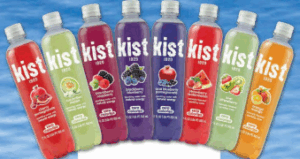
The Federal Circuit began by emphasizing that the KIST mark was not a design mark and the image of lips did not always appear beside the mark. The Court relied on the following image in its opinion, noting that “[n]one of the bottles include a lips image or reference a kiss” and instead “emphasize flavors.”

kist bottles

The Federal Circuit noted that the record contains no evidence concerning the degree of consumer exposure to the mark with the image of lips versus without lips. The Court found that the Board relied too heavily on the KIST mark’s appearance alongside an image of lips, and ultimately determined that substantial evidence did not support the finding that the mark referenced a kiss. The Court noted that while some of the SUNKIST marks contained a sun, many were standard character marks that did not include a sun. The Court thus concluded that substantial evidence did not support a finding that the similarity of the marks favored no likelihood of confusion.

Since the Board had previously found that the remaining DuPont factors favored likelihood of confusion and the Federal Circuit determined that the similarity of the marks also favored likelihood of confusion, the only remaining consideration was actual confusion. Although Sunkist had not proven instances of actual confusion, the Court noted that its precedents had never required actual confusion, [...]

Continue Reading


read more

Game over: Prior interference doesn’t preclude IPR proceeding

The US Court of Appeals for the Federal Circuit affirmed a Patent Trial & Appeal Board unpatentability determination during an inter partes review (IPR) proceeding, concluding that the Board’s decision to not apply interference estoppel fell within the general rule of unreviewability. IGT v. Zynga Inc., Case No. 23-2262 (Fed. Cir. July 22, 2025) (Prost, Reyna, Taranto, JJ.)

IGT owns an expired patent that addresses the need for gaming machines, such as slot machines and video poker machines, to securely communicate over a public network. The patent was issued in January 2007 from an application filed in April 2002 and published in August 2002. Zynga filed a patent application on August 21, 2003, that included claims copied from IGT’s published application.

In March 2010, the US Patent & Trademark Office (PTO) Board of Patent Appeals & Interferences (predecessor of the Patent Trial & Appeal Board, which Congress created in 2011) declared an interference proceeding between Zynga’s application and IGT’s patent. During the interference proceeding, Zynga argued IGT’s patent was obvious over three pieces of prior art. IGT argued that Zynga lacked standing because the claims in Zynga’s application were unpatentable for a lack of written description. The Board granted IGT’s motion for judgment on the “threshold issue” that Zynga’s application lacked adequate written description support, terminated the interference with a judgment against Zynga, and dismissed the motion that the claims were unpatentable as moot.

In April 2021, IGT sued Zynga alleging infringement of six patents, including the patent that was subject to the interference proceeding. Zynga filed an IPR petition for that patent, asserting obviousness based on new prior art. In its preliminary response, IGT argued that the Board should deny institution based on interference estoppel under 37 C.F.R. § 41.127(a)(1) because Zynga could have raised the newly asserted art in the interference proceeding. The Board rejected IGT’s interference estoppel arguments because:

  • The interference was terminated based on the “threshold issue” of lack of written description and therefore the Board did not analyze or decide any issues of unpatentability.
  • It would be unfair to estop Zynga, and to the extent that estoppel applied, the Board waived its application under 37 C.F.R. § 42.5(b).

IGT requested rehearing and precedential opinion panel review, arguing that interference estoppel barred institution. The PTO Director affirmed the Board’s decision, stating that interference estoppel under § 41.127 did not apply because IPR proceedings are governed by 37 C.F.R. pt. 42, which does not incorporate Part 41 or its estoppel provisions. The PTO Director also noted that the Board’s termination was based on a threshold issue. The Board proceeded with the review and ultimately concluded that all the challenged claims were unpatentable as obvious. IGT appealed.

IGT argued that the Board and PTO Director erred in ruling that interference estoppel did not bar the petition and challenged the Board’s holding that the claims would have been obvious over the newly asserted prior art.

The Federal Circuit concluded that the interference estoppel determination fell within the [...]

Continue Reading


read more

Royal Play Penalty: No Standing in the End (Zone)

The US Court of Appeals for the Federal Circuit dismissed an appeal from the Trademark Trial & Appeal Board, finding that the appellant lacked standing because it failed to allege any actual and particularized injury. Michael J. Messier v. New Orleans Louisiana Saints, LLC, Case No. 24-2271 (Fed. Cir. Apr. 14, 2025) (per curiam) (Moore, C.J.; Prost, Stark, JJ.) (nonprecedential)

Michael J. Messier claimed that he is a direct descendent of the kings of France, and that he and his family own intellectual property rights to the Fleur-de-Lis mark used by the NFL’s New Orleans Saints. Messier filed a petition with the Board for cancellation of the Saints’ Fleur-de-Lis mark. Messier’s petition contained no claim that he or his family currently use any fleur-de-lis marks in commerce or any other avenues for revenue, such as licensing. The Board dismissed the petition.

The Board held that pursuant to Sections 13 and 14 of the Lanham Act, 15 U.S.C. §§ 1063 and 1064, to maintain a cancellation action, Messier had to “allege a commercial interest in the registered mark or a reasonable belief in damage from the mark’s continued registration.” Messier’s original and amended petitions failed to do so. The Board noted that Messier did not own or conduct “any business under the mark, and thus he cannot allege entitlement.” Messier appealed.

The Federal Circuit determined that Messier lacked standing to bring the appeal. The Court explained that to demonstrate Article III standing for his appeal, Messier had to demonstrate actual or imminent injury that was concrete and particularized, a causal connection between the alleged conduct and the injury, and potential redressability by a favorable decision. Messier failed to meet his burden, primarily because he failed to demonstrate injury by the Saints’ use of the Fleur-de-Lis mark that went beyond “a general grievance or abstract harm.” Messier did not allege that he used a fleur-de-lis design in commerce whatsoever and thus failed to demonstrate any injury.


read more

PTO Reverts to Prior Post-Grant Guidelines for Cases Involving Parallel District Court Litigation

On February 28, 2025, the acting director of the US Patent & Trademark Office (PTO) announced that the agency will revert to previous guidelines for discretionary denials of petitions for post-grant proceedings where there is ongoing district court litigation.

This announcement rescinds the PTO’s June 21, 2022, memorandum entitled “Interim Procedure for Discretionary Denials in AIA Post-Grant Proceedings with Parallel District Court Litigation.” The memorandum stated that the Patent Trial & Appeal Board “will not deny institution of an IPR or PGR under Fintiv (i) when a petition presents compelling evidence of unpatentability; (ii) when a request for denial under Fintiv is based on a parallel ITC proceeding; or (iii) where a petitioner stipulates not to pursue in a parallel district court proceeding the same grounds as in the petition or any grounds that could have reasonably been raised in the petition.” The memorandum effectively limited the discretion granted in Fintiv, which outlined six factors for the Board to consider when making decisions on post-grant proceedings involving parallel district court litigation.

Now that the 2022 memorandum has been rescinded, parties to post-grant proceedings should refer to Board precedent, including Fintiv and Sotera Wireless v. Masimo, for guidance when there are parallel district court proceedings. In accordance with prior guidelines, the PTO’s objective is to achieve greater consistency in its decision-making processes, especially in situations where patent validity is contested both in the courts and before the Board. The PTO emphasized that any portions of future Board decisions that rely on the 2022 memorandum will not be binding or persuasive.

Practice Note: Because of this action, the Board will now enjoy greater discretion when ruling on post-grant petitions, which may result in an increase of discretionary denials.


read more

Case Closed: OpenAI Prevails on Secondary Meaning

The US Court of Appeals for the Ninth Circuit affirmed a district court’s grant of a preliminary injunction (PI) in a trademark action under the Lanham Act, stating that the district court’s ruling was not clearly erroneous based on its finding that the plaintiff had likely acquired secondary meaning in the mark. OpenAI, Inc. v. Open Artificial Intelligence, Inc., Guy Ravine, Case No. 24-1963 (9th Cir. Nov. 13, 2024) (Thomas, Owens, Collins, JJ.) (per curiam) (Collins, J., dissenting) (nonprecedential).

OpenAI is the founder of ChatGPT and other artificial intelligence tools. OpenAI has used the OPENAI (no space) mark extensively in association with its goods, services, website, social media, and marketing. OpenAI first attempted to register the mark with the US Patent & Trademark Office (PTO) in 2016, but the PTO rejected the mark as being merely descriptive and potentially confusing with Guy Ravine’s prior-filed application for the mark OPEN AI (with a space). Ravine claimed to have used the mark as early as 2015, which would have predated OpenAI’s use of its mark. However, the PTO also rejected Ravine’s application for registration on the Principal Register under a similar rationale, and the OPEN AI mark was only accepted for registration on the Supplemental Register in 2017. Neither mark is registered on the Principal Register.

OpenAI filed a trademark action under the Lanham Act against Ravine’s company, Open Artificial Intelligence, and sought a PI, which the district court granted after finding that OpenAI had established that it had acquired distinctiveness in the mark. Ravine appealed the denial of Open Artificial Intelligence’s motion under Fed. R. Civ. P. 59(e) and 60(b) to amend or vacate that injunction.

A PI is granted when a plaintiff establishes that:

  • It is likely to succeed on the merits.
  • It is likely to suffer irreparable harm.
  • The balance of equities tips in its favor.
  • An injunction is in the public interest.

The Ninth Circuit applies a sliding scale approach, where a stronger showing of one factor could offset a weaker showing of another factor. To succeed on a trademark infringement claim, a plaintiff must show that it has a protectible ownership interest in the mark and that the defendant’s use of the mark is likely to cause consumer confusion.

To evaluate the claims, the district court looked at each of the parties’ history and use of the disputed marks. The district court noted that OpenAI had used its mark in connection with its most widely used product, ChatGPT, resulting in the mark becoming a household name. The district court recognized that OpenAI’s trademark was one of the most recognized in artificial intelligence (AI) history. The district court noted that OpenAI’s website was one of the most visited websites, with almost 100 million monthly active users. In contrast, the district court found that Ravine had not established that he had used the mark in commerce prior to OpenAI’s use and even took issue with Ravine’s representations regarding his use of the mark. The district court granted [...]

Continue Reading


read more

STAY CONNECTED

TOPICS

ARCHIVES