
Results for "Trademark appeal"
Subscribe to Results for "Trademark appeal"'s Posts

PTO Requests Comments on Initiatives to Expand Board Opportunities, Registration to Practice Criteria

In a pair of notices, the US Patent & Trademark Office (PTO) announced on October 18, 2022, that it is seeking public input on proposed initiatives directed at expanding opportunities to appear before the Patent Trial & Appeal Board, (Board) and expanding admission criteria for registration to practice in patent cases before the PTO. PTO Director Kathi Vidal explained that “[t]hese proposals are part of our broader initiatives to improve quality and participation.”

Regarding the expansion of opportunities to appear before the Board, the PTO requested comments on the following six questions:

  1. Are there any changes to Board rules or procedures that the PTO or the Board should make to increase opportunities to appear and/or serve as counsel and/or the lead counsel in America Invents Act (AIA) proceedings?
    1. If “yes” to question 1 as to the lead counsel, should the rules require that a non-registered practitioner have prior experience in AIA proceedings and/or have completed training before being designated as the lead counsel? What level of experience and/or type of training should be required?
  2. Should any rule or procedure revised by the PTO that permits a non-registered practitioner to be designated as the lead counsel in an AIA proceeding also require that any such non-registered practitioner be accompanied by a registered practitioner as backup counsel? If not, are there any circumstances or events that might occur during an AIA proceeding (g., the contemplated or actual filing of a motion to amend) that might warrant requiring a registered practitioner to then appear as backup counsel?
  3. Would a rule requiring that the lead counsel or backup counsel in an AIA proceeding be a registered practitioner have a significant impact on the cost of such a proceeding? If so, what would the impact be and would the impact be justified?
  4. Should any of the changes discussed above, if adopted, be implemented as a pilot program?
  5. Are there additional training and/or development programs the PTO should offer to increase opportunities for less experienced practitioners to appear as counsel and/or serve as the lead counsel in AIA proceedings?
  6. Are there any changes to the Legal Experience and Advancement Program (LEAP) that the PTO should make to increase opportunities to appear and/or serve as the lead counsel in AIA proceedings?

Regarding expanding the admission requirements to practice in patent matters before the PTO, comments on the following five topics were requested:

  1. The General Requirements Bulletin (GRB) lists three categories of scientific and technical qualifications typically used for eligibility for admission to the registration examination: (1) Category A, for specified bachelor’s, master’s and PhD degrees; (2) Category B, for other bachelor’s, master’s and PhD degrees with technical and scientific training; and (3) Category C, for individuals who rely on practical engineering or scientific experience and have passed the Fundamentals of Engineering test. The PTO is seeking comments as to acceptable degrees and whether it should add Category B degrees on a predetermined timeframe (g., every three years).
  2. Should the PTO accept [...]

    Continue Reading


read more

Long Live the Kingpin: No Abandonment Based on Nonuse During Drug Sanctions Period

In a precedential decision, the Trademark Trial & Appeal Board (Board) dismissed an opposition, finding that the trademark applicant’s long period of nonuse due to government sanctions was excusable nonuse and not abandonment. ARSA Distributing, Inc. v. Salud Natural Mexicana S.A. de C.V., Opposition No. 91240240, 91243700 (TTAB Sept. 28, 2022) (Taylor, Greenbaum, English, ATJ)

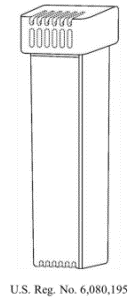
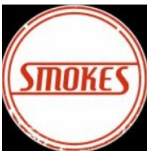
Salud sought a trademark registration of the standard character mark EUCALIN for “pharmaceutical products, namely, vitamin supplements, nutritional supplement made with a syrup with jelly base, honey base, and with a mixture of plants with propolis base, and herbal remedies in the nature of herbal supplements,” and the composite mark set forth below for “herbal supplements; nutritional supplements; vitamin supplements.”

ARSA opposed the registration, alleging prior common law use of the mark EUCALIN for “dietary and nutritional supplements.” ARSA argued that its sales and advertising of its EUCALIN product from 2008 to October 6, 2015, and October 9, 2017, established that ARSA had used its EUCALIN mark long before the constructive use filing dates of Salud’s application. Thus, ARSA had priority of use of the EUCALIN mark on nutritional and dietary supplements.

In response, Salud asserted it had priority in the EUCALIN mark based on use since 1999. Salud argued that between 1999 and October 2008, ARSA was Salud’s US distributor and, therefore, all goodwill for any EUCALIN-labeled product went to Salud as the supplier of the goods and products.

ARSA asserted that there was no distribution agreement between the parties, but even if Salud “could have reasonably claimed rights based on some alleged distribution agreement before 2008,” Salud “has long since abandoned any rights it would have had.” ARSA asserted that Salud was legally banned from conducting business in the United States between October 2, 2008, and May 2015 because it was declared a Specially Designated Narcotics Trafficker (SDNT). ARSA argued that Salud failed to produce any evidence establishing that it had concrete plans or intent to resume use between 2008 and 2015.

The Board found that there was no clear manufacturing-distribution agreement between the parties, and therefore there was a rebuttable presumption that the manufacturer (Salud) owned the mark. The Board explained that the following six factors are considered in determining which party has superior rights:

  1. Which party created and first affixed the mark to the product
  2. Which party’s name appeared with the trademark on packaging and promotional materials
  3. Which party maintained the quality and uniformity of the product, including technical changes
  4. Which party the consuming public believes stands behind the product (g., the party to which customers direct complaints and contact for correction of defective products)
  5. Which party paid for advertising
  6. What a party represents to others about the source or origin of the product.

The Board concluded that, on the balance, the factors favor Salud. The Board explained that the first, second, third and sixth factors favored Salud because it created the mark and product, maintained quality control over [...]

Continue Reading


read more

Cloudy Skies: PTO Director Finds Abuse and Sanctionable Conduct

The US Patent & Trademark Office (PTO) Director issued a precedential opinion finding that filing an inter partes review (IPR) solely to extract payment in a settlement—without the intent to prosecute the IPR to completion—is a sanctionable abuse of process. OpenSky Indus., LLC v. VLSI Tech. LLC, IPR2021-01064 (Oct. 4, 2022) (Vidal, Dir.)

In 2019, VLSI asserted two patents against Intel. In response, Intel filed two IPRs against the allegedly infringed patents, but both IPRs were discretionally denied by the Patent Trial & Appeal Board (Board) based on the advanced stage of the underlying litigation and overlapping issues. The suit proceeded, and a jury awarded VLSI more than $600 million in damages in 2021.

OpenSky Industries was founded two months after the judgment. OpenSky filed a “copycat” IPR petition based on Intel’s previous petitions (including refiling the declarations of Intel’s expert without his knowledge) targeting VLSI’s two allegedly infringed patents. The Board instituted over VLSI’s argument, noting that patentability issues were raised that had not been resolved in the district court case. Initially, OpenSky attempted to settle the IPRs with VLSI, but VLSI refused. OpenSky then reached out to Intel, offering to let Intel collaborate if it agreed to pay a success fee. Intel refused and later filed its own IPR petition and joinder motion. After Intel’s refusal, OpenSky pivoted back to VLSI, offering to “refuse[] to pay [the] expert for time at deposition so [the] expert does not appear at deposition” in return for payment. VLSI reported the scheme to the Board.

Intel was joined as a party to the OpenSky IPR proceeding in June 2022 based on its later-filed petition. Once Intel joined, OpenSky threatened to forego both deposing VLSI’s expert and filing its reply brief unless Intel paid it for its “prior work in the IPR” plus “additional remuneration.” Intel refused. While OpenSky did notice VLSI’s expert, it declined to file a Petitioner Reply brief, forcing Intel to draft the reply. Later, at VLSI’s request (OpenSky missed the request date), oral argument in the proceeding took place before the Board. OpenSky did not meaningfully participate.

While all this was unfolding, the Director sua sponte initiated an investigation to determine “[w]hat actions the Director . . . should take when faced with evidence of an abuse of process or conduct that otherwise thwarts . . . the goals of the Office and/or the AIA.” To begin the investigation, the Director sent discovery requests to each of the three parties. VLSI and Intel complied. OpenSky, by comparison, either incompletely complied with or directly refused each request. Based on those evasions, the Director sanctioned OpenSky for discovery misconduct, applying adverse inferences against OpenSky on each request.

Discovery sanctions in place, the Director moved to the central question: Did OpenSky abuse the IPR process? The Director answered yes.

First, the Director found that OpenSky’s conduct violated its duty of candor and good faith to the Board. In its negotiations with VLSI, OpenSky offered to deliberately sabotage its own petition to hinder Intel. In its negotiations with Intel, OpenSky did [...]

Continue Reading


read more

The Board Is Back in Town: Arthrex Can’t Save Untimely Motions to Terminate

The US Court of Appeals for the Federal Circuit affirmed a Patent Trial & Appeal Board (Board) unpatentability finding and denial of a motion to terminate, finding that the Board had already issued final written decisions that were not vacated at the time the Board denied the parties’ motion to terminate. Polaris Innovations Ltd. v. Derrick Brent, Deputy Under Secretary of Commerce for Intellectual Property and Deputy Director of The United States Patent and Trademark Office, Case No. 19-1483 (Fed. Cir. Sept. 15, 2022) (Prost, Chen, Stoll, JJ.)

Polaris owns two unrelated patents directed to computer memory. The first patent relates to improved control component configuration, and the second patent relates to a shared-resource system in which logical controls are used to manage resource requests. In 2016, Polaris filed a complaint accusing NVIDIA of infringing both patents. NVIDIA responded by filing petitions for inter partes review (IPR) against each patent. In 2017, the Board issued its final written decisions, finding the challenged claims of both patents unpatentable. Polaris appealed.

The Federal Circuit vacated the Board’s decision in view of Arthrex, Inc. v. Smith & Nephew, Inc. (Arthrex I). On remand, the Board administratively suspended the IPR proceedings pending potential Supreme Court review of Arthrex I. During the administrative suspension, Polaris and NVIDIA filed a joint motion to terminate the proceedings. While those motions were pending, the Supreme Court vacated Arthrex I, substituting an alternative remedy for violation of the Appointments Clause in United States v. Arthrex, Inc. (Arthrex II). In view of Arthrex II, the Supreme Court vacated the Federal Circuit’s vacatur of the Board’s final written decision, thus reinstating those decisions.

On remand to the Board, Polaris argued that the Board should grant Polaris’s then-pending motion to terminate. The Chief Administrative Law Judge responded that termination was not appropriate because the Supreme Court’s decision meant that the “final written decision in each of these cases is not vacated, and it is not necessary for the Board to issue a new final written decision in either of these cases.” Polaris filed a request for Director rehearing. The Director denied rehearing. Polaris appealed.

Polaris argued that the Board erred by failing to grant the joint motions to terminate filed in both proceedings before the Board on remand. Relying on 35 U.S.C. § 317, the Federal Circuit explained that motions to terminate should be granted “unless the Office has decided the merits of the proceeding before the request for termination is filed.” The Court found that the Board had already decided the merits of the cases in final written decisions that were not vacated at the time the Board made its decision denying Polaris’s motions to terminate. The Court therefore affirmed the Board’s decision that termination was inappropriate.

Polaris also raised two claim construction arguments. Polaris argued that the Board misconstrued the term “memory chip” in the IPR involving one of the challenged patents and misconstrued the term “resource tag buffer” in the IPR involving the [...]

Continue Reading


read more

FDCA’s Exclusive Enforcement Provision Reigns Supreme over State Laws

In its first occasion to interpret § 353b of the Federal Food, Drug, and Cosmetic Act (FDCA), the US Court of Appeals for the Ninth Circuit relied on the “implied preemption doctrine” to affirm a district court’s case dismissal for failure to state a claim under Fed. R. Civ. P. 12(b)(6). Nexus Pharmaceuticals, Inc. v. Central Admixture Pharmacy Services, Inc., Case No. 20-56227 (9th Cir. Sept. 13, 2022) (Kleinfeld, Nelson, VanDyke, JJ.)

Nexus developed and trademarked Emerphed, a US Food & Drug Administration (FDA) approved ready-to-use ephedrine sulfate in a vial. Central Admixture operates a network of compounding pharmacies and sells ephedrine sulfate in ready-to-use syringes without FDA approval, because compounding pharmacies do not need FDA approval. Compounding happens when ingredients in medicines are combined, mixed and altered for individual patients. Under 21 U.S.C. § 353b, drug compounding by “outsourcing facilities” is allowed without FDA approval, but the FDCA excludes compounded drugs that are “essentially a copy of one or more approved drugs.”

The FDCA contains an exclusive enforcement provision prohibiting private enforcement, stating that proceedings to enforce or restrain violations of the FDCA, which includes the compounding statute, must be by and in the name of the United States. To avoid the FDCA’s bar on private enforcement, Nexus alleged that Central Admixture violated the laws of several states in which it sells Emerphed, all of which prohibit the sale of drugs not approved by the FDA. Nexus argued that Central Admixture’s ephedrine sulfate was “essentially a copy” of Emerphed and therefore was excluded from the outsourcing facilities exception. The district court disagreed and dismissed the state law claims under the implied preemption doctrine. The district court explained that all of Nexus’s claims depended on the determination of whether Central Admixture’s ephedrine sulphate was “essentially a copy” of Emerphed, and that the “plain text of the [FDCA] left that determination in the first instance to the FDA and its enforcement process.” Nexus appealed.

The Ninth Circuit explained that the Supremacy Clause of the US Constitution is the “source of preemption doctrine, which invalidates state laws that are contrary to federal statutes,” but noted that there is no clear sorting of case law and no rigid formula to determine when state law runs contrary to federal law. Therefore, the Court relied on several controlling cases regarding the statute governing FDA approval of medical devices, not drugs. Medical device cases are distinguishable because the medical device statute includes an express preemption clause prohibiting states from imposing any safety or effectiveness requirement different from or in addition to those imposed by federal law. In explaining these cases, the Court noted that the claims that were allowed to go forward did not rely on noncompliance with FDA requirements (as Nexus did), but rather on traditional tort law duties. The purported violation of a state law that substantively says “comply with the FDCA” is not a traditional common law tort. The Court also explained that these cases taught that despite a presumption against implied preemption, [...]

Continue Reading


read more

PTO Switches to New Public Search Tools, New PTAB Filing System

The US Patent & Trademark Office (PTO) will replace four legacy tools—Public-Examiner’s Automated Search Tool, Public-Web-Based Examiner’s Search Tool, Patent Full-Text and Image Database (PatFT) and Patent Application Full-Text and Image Database (AppFT)—with the new Patent Public Search Tool (PPUBS) on September 30, 2022. The PTO first announced the transition to the new tool in February 2022.

Existing links to US patents and US pre-grant publications in PatFT and AppFT will be terminated following the retirement of these services. US patents and US pre-grant publications can be directly accessed via PPUBS, and links for direct document access to US patents and US pre-grant publications can be set up on a webpage or document. According to the PTO, PPUBS provides more convenient, remote and robust full-text searching of all US patents and US pre-grant publications. PPUBS also streamlines the search process for users, provides alternatives for existing services and incorporates new features. Step-by-step instructions for performing these functions can be found here.

The PTO also announced that as of October 11, 2022, the Patent Trial & Appeal Board E2E system used for electronically filing all documents related to Inter Partes and Post Grant reviews, Transitional Program for Covered Business Mmethod Patents, and Derivation Proceedings will be replaced by the Patent Trial & Appeal Tracking System (P-TACTS) platform. The E2E system will be unavailable starting at 5:00 pm EDT on October 9, 2022, through 11:00 pm EDT on October 10, 2022 (which is a federal holiday). For more information about the platform migration and how to register to use P-TACTS, click here.


read more

Nothing Private about Relator’s Qui Tam Action Info

The US Court of Appeals for the Ninth Circuit reversed a district court’s order denying the defendants’ motion to dismiss a qui tam action under the False Claims Act (FCA) and remanded for further proceedings. U.S. ex rel Silbersher v. Allergan, Inc., Case No. 21-15420 (9th Cir. Aug. 25, 2022) (Gould, Bennett, Nelson, JJ)

Relator Silbersher, a patent lawyer, brought his action against the defendants under the FCA. (31 U.S.C. § 3730(b)). Silbersher alleged that the defendants unlawfully obtained several patents related to two drugs used to treat Alzheimer’s disease. He asserted that by fraudulently obtaining these patents, the defendants prevented generic drug competitors from entering the market. As a result, Medicare paid inflated prices for the two drugs in violation of the FCA.

The US Department of Justice, all of the states that have analogues to the federal qui tam provision and the District of Columbia declined to intervene in Silbersher’s action. Additionally, the key factual information in Silbersher’s complaint was all disclosed publicly and much of it could be found on the US Patent & Trademark Office’s (PTO) website as well as on other government websites. The district court denied the defendants’ motion to dismiss, holding that the public disclosure bar did not apply to Silbersher’s claims. The defendants appealed.

The Ninth Circuit reversed and remanded, noting that the “FCA creates civil liability for ‘any person who (A) knowingly presents, or causes to be presented, a false or fraudulent claim for payment or approval; [or] (B) knowingly makes, uses, or causes to be made or used, a false record or statement material to a false or fraudulent claim.’ 31 U.S.C. § 3729(a)(1).” The FCA limits who can bring a qui tam action and the sources of information upon which they can base their suit. The public disclosure bar seeks to strike a balance between encouraging suits by whistleblowers with genuinely valuable information and discouraging plaintiffs who have no significant information of their own to contribute. The Court, citing its 2018 case United States ex rel. Solis v. Millennium Pharms., reaffirmed the elements of the test for triggering the bar:

“(1) the disclosure at issue occurred through one of the channels specified in the statute;


(2) the disclosure was public; and


(3) the relator’s action is substantially the same as the allegation or transaction publicly disclosed.”

The Ninth Circuit determined that only the first element was at issue in this case and that “[i]t is salient and potentially controlling that the key factual information underlying Silbersher’s complaint was all publicly disclosed, and much could be found in websites maintained by the PTO and other government agencies.” Under the public disclosure bar, a court shall dismiss an action or claim if substantially the same allegations or transactions as alleged were publicly disclosed (1) in a federal criminal, civil or administrative hearing in which the government was a party; (2) in a congressional, Government Accountability Office, or other federal report, hearing, audit or investigation or (3) from the news [...]

Continue Reading


read more

Claim at Issue Must Be Substantively Allowable to Qualify for PTA

The US Court of Appeals for the Federal Circuit affirmed two district court decisions, finding that a patent owner who only partially prevailed in one of two appeals was not entitled to any additional patent term adjustments (PTAs) from the US Patent & Trademark Office (PTO) under 35 U.S.C. § 154(b)(1)(C) during the pendency of their district court appeals. SawStop Holding LLC v. Vidal, Case No. 2021-1537 (Fed. Cir. Sept. 14, 2022) (Newman, Linn, and Chen, JJ.)

SawStop owns two patents directed to saws with a safety feature that stops a power-saw blade upon contact with flesh. During prosecution of the application for one of the patents, SawStop appealed an obviousness rejection to the Patent Trial & Appeal Board (Board). The Board affirmed the obviousness rejection but on new grounds. The patent ultimately issued after SawStop amended the claim at issue to overcome the obviousness rejection.

Similarly, during prosecution of the application for the second patent, independent claim 1 was rejected as being anticipated and for obviousness-type double patenting while dependent claim 2 was rejected as anticipated. SawStop appealed the rejections. The Board affirmed both rejections of claim 1 but reversed the rejection of claim 2. SawStop subsequently challenged the Board’s anticipation rejection of claim 1 before the US District Court for the District of Columbia, which reversed the anticipation rejection. SawStop did not challenge the obviousness-type double patenting rejection. On remand to the Board, SawStop cancelled claim 1 and rewrote claim 2 as an independent claim. A patent subsequently issued.

Since issuance of both patents was delayed by appeals before allowance, SawStop requested PTAs under Section 154(b)(1)(C):

Subject to the limitations under paragraph (2), if the issue of an original patent is delayed due to … (iii) appellate review by the Patent Trial and Appeal Board or by a Federal Court in a case in which the patent was issued under a decision in the review reversing an adverse determination of patentability, the term of the patent shall be extended 1 day for each day of the pendency of the proceeding, order, or review, as the case may be.

The Board granted PTA “for the delay incurred in the successful reversal of the rejection of claim 2” of the second patent but denied additional PTA for both patents resulting from the appeals. SawStop filed suits in the US District Court for the Eastern District of Virginia, challenging the Board’s decision. The court granted summary judgment in favor of the PTO in both suits. SawStop then appealed to the Federal Circuit.

The Federal Circuit affirmed, finding that SawStop was interpreting Section 154(b)(1)(C) too broadly. SawStop argued in part that any examiner rejection overturned on appeal qualified as “a reversal of a determination of patentability.” The Court rejected this argument, explaining that the Board’s adverse determination of unpatentability remained before and after the appeal to the Board. That is, “the reversal of a ‘determination of patentability’ requires a determination that the claim in question is substantively allowable, not just free of [...]

Continue Reading


read more

Sometimes Inactions Speak Louder Than Words

The US Court of Appeals for the Federal Circuit affirmed a decision granting summary judgment in favor of the US Patent & Trademark Office (PTO) regarding the propriety of imposing a restriction requirement on a pre-General Agreement on Tariffs and Trade (GATT) patent. Hyatt v. PTO, Case No. 2021-2324 (Fed. Cir. Sept. 8, 2022) (Moore, Prost, and Hughes, JJ.)

This action arose from the prosecution of a pre-GATT application that claimed priority to applications filed as early as 1983. The issue stems from changes to US patent law limiting patent terms to 20 years from their filing date. The old law provided a grant that lasted 17 years from a patent issuance. As the Federal Circuit noted in early litigation involving Gilbert Hyatt, tying patent term to the grant date “incentivized certain patentees to delay prosecuting their patents by abandoning applications and filing continuing applications in their place.” But the change in law left a gap for so-called transitional applications—those filed but not yet granted before the new law took effect. This “‘triggered a patent application gold rush in the spring of 1995’ by applicants who wanted their patent claims to be governed under the [old law]­ … This gold rush is ‘often referred to as the ‘GATT Bubble.’’”

Hyatt, a prolific inventor, is named in a series of pre-GATT applications filed in 1995 during the GATT bubble. Since then, he has continued to prosecute these applications. As a result of various litigations, the PTO stayed the prosecution of many of these applications between 2003 and 2012. In 2013, over Hyatt’s objections, the PTO required him to select eight claims from an application containing 200 for prosecution. In 2015, the PTO issued a non-final rejection on said claims. Hyatt responded by essentially rewriting the claims in their entirety. The examiner then issued a restriction requirement between the original and amended claims, which would require Hyatt to submit a new application with the new claims, which would be subject to the new law. The restriction requirement was based on the “applicant-action exception,” which allowed the PTO to issue a restriction requirement when the examiner could not have previously made one because of the actions of the applicant. The authority for the PTO action was rooted in Rule 129 (b)(1) (ii), which in relevant part provides:

(1) In an application … that has been pending for

at least three years as of June 8, 1995 … no requirement

for restriction . . . shall be made or maintained

in the application after June 8, 1995, except where:

(ii) The examiner has not made a requirement for

restriction in the present or parent application

prior to April 8, 1995, due to actions by the applicant

After the PTO issued a restriction requirement, Hyatt filed an action in the US District Court for the Eastern District of Virginia, alleging that the PTO violated the Administrative Procedure Act because the restriction requirement was arbitrary, capricious, an abuse of discretion or otherwise not in [...]

Continue Reading


read more
PTO Director Lays Out Limits on “Roadmapping” as Factor for Discretionary IPR Denials

Exercising its discretion under 35 U.S.C. § 314(a), the Patent Trial & Appeal Board (Board) denied institution of two inter partes reviews (IPRs) based on its understanding of its own precedential 2017 decision in Gen. Plastic Indus. Co. v. Canon Kabushiki Kaisha. US Patent & Trademark Office Director Kathi Vidal subsequently reversed the Board’s ruling in a precedential sua sponte decision clarifying how to apply the seven factors set forth in General Plastic. Code200, UAB v. Bright Data, Ltd., IPR2022-00861; -00862, Paper 18 (PTAB Aug. 23, 2022) (Vidal, Dir. of PTO).

In General Plastic, the Board addressed the practice of filing seriatim petitions attacking the same patent, where each petition raises a new ground for invalidity. The Board considers the General Plastic factors when determining whether to deny IPR institution to ensure efficient post-grant review procedures and prevent inequity. The seven factors are as follows:

  1. Whether the same petitioner previously filed a petition directed to the same claims of the same patent
  2. Whether at the time of filing of the first petition the petitioner knew of the prior art asserted in the second petition or should have known of it
  3. Whether at the time of filing of the second petition the petitioner had already received the patent owner’s preliminary response to the first petition or had received the Board’s decision on whether to institute review in the first petition
  4. The length of time that elapsed between the time the petitioner learned of the prior art asserted in the second petition and the filing of the second petition
  5. Whether the petitioner provided adequate explanation for the time elapsed between the filings of multiple petitions directed to the same claims of the same patent
  6. The finite resources of the Board
  7. The requirement under 35 U.S.C. § 316(a)(11) to issue a final determination no later than one year after the date on which the PTO Director notices institution of review.

In denying institution in this case, the Board explained that the petitioner’s failure to stipulate that it would not pursue the same grounds in district court “weigh[ed] strongly in favor of exercising discretion to deny institution and outweigh[ed] the fact that the Board did not substantively address the merits of the prior petition.” Director Vidal disagreed, reasoning that when a first petition is not decided on its merits, a follow-on petition affords a petitioner the opportunity to receive substantive consideration. Director Vidal further explained that factor 1 “must be read in conjunction with factors 2 and 3.” Application of factor 1 in a vacuum strips context from a petitioner’s challenges and creates an inappropriate bright-line rule for denying institution.

Proper application of the General Plastic factors requires consideration of the potential for abuse by a petitioner. Director Vidal noted the problem of “roadmapping” raised in General Plastic (i.e., using one or more Board decisions to create a roadmap for follow-on filings until the petitioner finds a ground that results in institution). A denial decision based solely on the [...]

Continue Reading


read more
STAY CONNECTED

TOPICS

ARCHIVES