article of manufacture
Subscribe to article of manufacture's Posts

Virtually displayed: USPTO updates guidance for computer-generated interfaces and icons

To address evolving digital technologies, the United States Patent and Trademark Office (USPTO) issued supplemental guidance for examining design patent applications directed to computer-generated interfaces and icons. The guidance expands flexibility for applicants – particularly in projection, hologram, and virtual and augmented reality (PHVAR) contexts – while maintaining the statutory requirement that claimed designs be tied to an article of manufacture.

The USPTO first sought public input in 2020 on how the “article of manufacture” requirement under 35 U.S.C. § 171 should apply to emerging digital designs. Although many commenters urged recognition of PHVAR designs, subsequent guidance issued by the USPTO in 2023 did not fully address those technologies. The latest supplemental guidance responds to continued stakeholder feedback, particularly regarding the limitations imposed by prior drawing requirements.

Traditionally, applicants seeking protection for computer-generated icons or graphical user interfaces (GUIs) were required to depict a physical article of manufacture, such as a display screen, in solid or broken lines in the drawings. This requirement ensured that the claimed design was not merely a “transient or disembodied” image but was instead tied to a statutory article of manufacture.

The updated guidance removes the requirement that drawings depict a display panel or other physical article, provided that the title and claim clearly identify the relevant article of manufacture (e.g., a computer, computer display, or computer system). In such cases, the article need not appear in the drawings, so long as the application, taken as a whole, makes it clear that the claimed design is “for” an article of manufacture and not merely an abstract or disembodied image. For example, phrases such as “interface for a computer system” or “icon for a display panel” are sufficient to establish that the design is tied to a qualifying article.

The USPTO reiterated that the guidance “does not constitute substantive rulemaking and hence does not have the force and effect of law.” Examiners will continue to evaluate applications under all applicable patentability provisions, including §§ 102, 103, and 112.

Overall, the updated guidance provides applicants with greater flexibility in claiming and depicting computer-generated designs while reaffirming that such designs must remain tied to a qualifying article of manufacture.


read more
Chilly Adventures: Design Patent Prior Art Comparison Applies to Article of Manufacture

Addressing a matter of first impression concerning the scope of prior art relevant to a design patent infringement analysis, the US Court of Appeals for the Federal Circuit concluded that “to qualify as comparison prior art, the prior-art design must be applied to the article of manufacture identified in the claim.” Columbia Sportswear North America, Inc. v. Seirus Innovative Accessories, Inc., Case Nos. 21-2299; -2338 (Fed. Cir. Sept. 15, 2023) (Prost, Reyna, Hughes, JJ.)

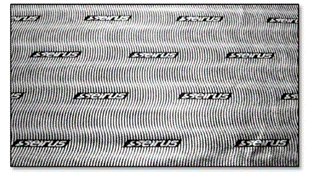
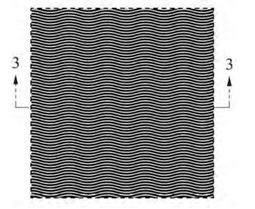
Columbia owns a design patent that covers an ornamental design of a heat reflective material. Seirus markets and sells products (e.g., gloves) made with material that it calls HeatWave. An image of Columbia’s patented design and Seirus’s HeatWave material appear below:

Columbia Patented Design

Seirus HeatWave

Columbia sued Seirus for infringement. After the district court granted summary judgment of infringement, Seirus appealed to the Federal Circuit. The Court issued its decision in Columbia I, concluding that the district court improperly declined to consider the effect of Seirus’s logo in its infringement analysis and resolved certain issues that should have been left to the jury. The Court therefore vacated summary judgment and remanded for further proceedings.

On remand, the district court held a trial. Before trial, the district court limited admissible comparison prior art to “wave patterns of fabric,” declined to instruct the jury that “prior art” referred to prior designs of the claimed article of manufacture, and declined to instruct the jury that it did not need to find that any purchasers were deceived or that there was any actual or likelihood of confusion among consumers in the marketplace. Seirus was permitted to admit three prior art references that disclosed fabric, and Columbia was precluded from distinguishing the references by arguing that they did not disclose heat reflective material. The jury returned a verdict of noninfringement. Columbia appealed.

Among other things, Columbia challenged the exclusion of evidence and jury instructions concerning comparison prior art, and the jury instructions implicating Seirus’s logo.

The Federal Circuit began by discussing the appropriate prior art comparison in the context of design patent infringement. Citing its 2008 en banc decision in Egyptian Goddess v. Swisa, the Court explained that under the ordinary-observer test governing design patent infringement, prior art can help highlight distinctions and similarities between the claims and the accused design. For instance, when a claimed design is close to a prior art design, small differences between the accused design and the claim design are likely to be important. Conversely, if an accused design copied a particular feature of the claimed design that departs from the prior art, the accused design is likely to be regarded as deceptively similar to the claimed design, and thus infringing.

The question of first impression before the Federal Circuit was the proper scope of comparison prior art that may be [...]

Continue Reading


read more

STAY CONNECTED

TOPICS

ARCHIVES