
priority of use
Subscribe to priority of use's Posts

All rise: Here comes the real judge

The US Court of Appeals for the Federal Circuit sustained the Trademark Trial & Appeal Board’s refusal to register trademark applications (over oppositions) for two character marks and a design mark based on the Board’s finding of likelihood of confusion with the common law rights of a world-famous baseball player and major league baseball’s players association  as supported by substantial evidence and consistent with trademark law. Chisena v. Major League Baseball Players Ass’n, Case No. 23-2073 (Fed. Cir. Jan. 8, 2026) (Hughes, Freeman, Lourie, JJ.) (nonprecedential).

Michael Chisena, acting pro se, sought trademark registration for two word marks, ALL RISE and HERE COMES THE JUDGE, and a design mark featuring a baseball field with a superimposed scale of justice and judge’s gavel (pictured below) (Chisena marks) for use in connection with “clothing, namely t-shirts, shirts, shorts, pants, sweatshirts, sweatpants, jackets, jerseys, athletic uniforms, and caps.”
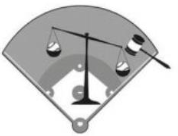
Source: Chisena v. Major League Baseball Players Ass’n, Case No. 23-2073 (Fed. Cir. Jan. 8, 2026), Slip Op at 2.

Chisena filed intent to use applications and alleged that the constructive use priority date for the word marks was July 14, 2017, and for the design mark it was October 12, 2017. The Major League Baseball Players Association (MLBPA) and Aaron Judge, a superstar Yankees outfielder and team captain (collectively, appellees), filed Notices of Opposition against registration of the marks, which the Board consolidated into a single proceeding.

Judge is a well-known baseball player whose rise to fame prompted the commercialization of judicial slogans and insignia in connection with his baseball career. The appellees alleged that the Chisena marks would likely cause confusion with their marks, which include ALL RISE and certain judicial symbols. They argued that they had common law trademark rights that predated Chisena’s alleged priority dates. The Board found that the appellees established priority against the Chisena marks and that there was a likelihood of confusion between the marks and therefore refused to register the Chisena marks. Chisena appealed.

The Federal Circuit found that the Board’s priority decisions were supported by substantial evidence that appellees’ marks were used in commerce prior to the Chisena marks’ priority date. The Court concluded that the priority dates for the Chisena marks were the constructive use filing dates since Chisena did not use the marks in commerce until after he filed the applications. The Court further relied on licensed products bearing judicial slogans, phrases, symbols, and personal indicia related to Judge used as early as June 2017 in holding that appellees’ common law trademark rights predated the Chisena marks’ priority dates.

Chisena argued that appellees did not adequately identify the specific marks at issue in their Notices of Opposition. The Federal Circuit agreed with the Board that the notices provided fair notice because they adequately claimed ownership of the marks that served as the basis for the opposition and the basis for appellees’ priority claims.

Chisena argued that the appellees’ [...]

Continue Reading


read more

Disgorgement of Profits Appropriate Remedy for Breach of Contract, Trademark Infringement

In a trademark infringement and breach of contract case involving real estate companies with a shared name, the US Court of Appeals for the Fourth Circuit affirmed summary judgment in favor of the trademark owner, including almost $43 million in profit disgorgement. Dewberry Engineers v. Dewberry Group, Case Nos. 22-1622; -1845 (4th Cir. Aug. 9, 2023) (Gregory, Thacker, JJ.) (Quattlebaum, J., dissenting).

Dewberry Engineers and Dewberry Group (formerly Dewberry Capital) operate in the same states, and both provide commercial real estate services. Dewberry Engineers started in the mid-1950s as a civil engineering and surveying firm in northern Virginia. Over time, its business expanded to include real estate development services such as architecture and site development. Dewberry Group similarly provides real estate development services through its affiliates, including the Dewberry Hotel in Charleston, South Carolina.

In 2006, Dewberry Group sent Dewberry Engineers a cease-and-desist letter, asserting that Dewberry Group had “senior common law rights” to use “Dewberry” in real estate. In response, Dewberry Engineers sued Dewberry Group for infringing its federally registered DEWBERRY trademark. That litigation ended in 2007 when the parties entered a confidential settlement agreement (CSA). Among other things, the CSA stated that Dewberry Group:

  • Would not challenge Dewberry Engineers’ trademark registrations
  • Could use its “Dewberry Capital” name except in enumerated geographical areas where it instead must use “DCC”
  • Would use no logo other than its “column” logo.

In 2017, Dewberry Group rebranded and attempted to register DEWBERRY GROUP and other marks, which the US Patent & Trademark Office (PTO) repeatedly rejected.

In 2020, Dewberry Engineers filed suit claiming breach of contract and trademark infringement under the Lanham Act and Virginia common law. The district court granted summary judgment to Dewberry Engineers on the contract claim, finding that Dewberry Group had violated the unambiguous CSA by changing its logo, among other offenses. The district court also granted summary judgment to Dewberry Engineers on its trademark infringement claim, finding that Dewberry Engineers’ mark was not only valid, it was incontestable since it had been in continuous use for more than five years. The district court also found that the likelihood-of-confusion factors favored infringement. The district court entered a permanent injunction against Dewberry Group’s use of “Dewberry” and granted Dewberry Engineers its attorneys’ fees and profit disgorgement. Because the court believed the tax information Dewberry Group provided did not show the true “economic reality” of the close relationship between Dewberry Group and its affiliates, the disgorgement calculation also included some of Dewberry Group’s affiliated companies’ profits. Dewberry Group appealed, challenging the summary judgment grant, the permanent injunction and the monetary awards.

The Fourth Circuit began by noting that there was “uncontroverted evidence” that Dewberry Group used the DEWBERRY trademark, used a logo other than its column logo and failed to use “DCC” in restricted areas, all in breach of the undisputedly valid CSA. The Court therefore affirmed the district court’s finding that Dewberry Group breached the CSA.

The Fourth Circuit next addressed the trademark infringement claim. The Court rejected [...]

Continue Reading


read more

STAY CONNECTED

TOPICS

ARCHIVES