
Year: 2025
Subscribe to Year: 2025's Posts

No Green Light to Register Color Mark for Medical Gloves

Addressing for the first time the test for determining whether a color mark is generic, the US Court of Appeals for the Federal Circuit adopted the Trademark Trial & Appeal Board’s Milwaukee test as the appropriate standard, affirming the Board’s determination that a dark green color mark used on medical examination gloves was generic. In re PT Medisafe Technologies, Case No. 2023-1573 (Fed. Cir. Apr. 29, 2025) (Prost, Clevenger, Stark, JJ.)

PT Medisafe filed an application to register a dark green color mark for use in connection with medical examination gloves:
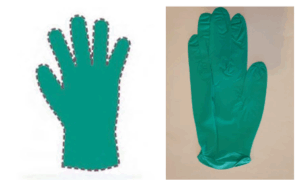
The US Patent & Trademark Office (PTO) examining attorney refused registration, alleging that the mark was not inherently distinctive and therefore required a showing of acquired distinctiveness. In response, Medisafe submitted evidence in support of acquired distinctiveness, including a declaration from a Medisafe vice president, promotional literature, and examples of competitive goods. The examining attorney was not swayed, issuing another office action stating that the mark had not acquired distinctiveness and was generic. Medisafe submitted additional evidence in support of acquired distinctiveness, including additional declarations, but the examining attorney ultimately issued a final office action refusing registration.

On appeal, the Board applied a two-step test to determine whether the applied-for color mark was generic:

  • What is the genus of the goods or services at issue?
  • Is the color “so common within the relevant genus that consumers would primarily associate it with the genus rather than as indicating a unique source of goods [or services] within the genus?”

This test, which was first articulated in the Board’s 2019 decision in Milwaukee Electric Tool v. Freud America, is a “slight variation” of the standard test for genericness set forth in the Federal Circuit’s 1986 decision in H. Marvin Ginn v. International Ass’n of Fire Chiefs, modified for use specifically with color marks.

The Board found that the appropriate genus was “all chloroprene medical examination gloves” and the relevant public included “all such people or businesses who do or may purchase chloroprene medical examination gloves.” The Board likewise agreed with the examining attorney that the color mark was generic because “it is so common in the chloroprene medical examination glove industry that it cannot identify a single source.”

The Board cited 25 examples of third parties using the same or a similar dark green color on medical examination gloves. Medisafe claimed that 15 of those 25 examples were Medisafe gloves, but the Board nonetheless affirmed the refusal, noting that “Medisafe made no such claim as to the other 10,” and “all 25 screenshots [are] probative of genericness because the relevant consumer – even including unspecified ‘authorized resellers’ – could be exposed to . . . gloves that appear under a large number of third-party marks without identifying [Medisafe] as the source or manufacturer.” Medisafe appealed to the Federal Circuit.

Medisafe argued that the Board applied the wrong standard in determining that [...]

Continue Reading


read more

“Payment Handler”: A Nonce Term Without Instructions

The US Court of Appeals for the Federal Circuit affirmed a district court’s ruling that a software term was a “nonce” term that invoked 35 U.S.C. § 112, sixth paragraph (i.e., a means-plus-function claim element). The Court further found that the patent specification did not recite sufficient corresponding structure, rendering the claim element indefinite. Fintiv, Inc. v. PayPal Holdings, Inc., Case No. 23-2312 (Fed. Cir. Apr. 30, 2025) (Prost, Taranto, Stark JJ.)

Fintiv sued PayPal for infringing four patents related to cloud-based transaction systems, also known as “mobile wallet platforms,” “mobile financial services platforms,” or “electronic payment systems.” During claim construction, the district court ruled that the terms “payment handler” and “payment handler service” were indefinite. The court concluded that both terms were means-plus-function limitations governed by § 112, sixth paragraph. Although the claims did not use the word “means,” the district court found that PayPal had demonstrated that the terms were drafted in a format consistent with traditional means-plus-function language, effectively substituting “payment handler” for the word “means.” The court also found that the patent specifications failed to disclose corresponding structure capable of performing the claimed functions. As a result, the court held the claims invalid for indefiniteness and entered final judgment. Fintiv appealed.

Fintiv argued that the district court erred in concluding that the payment handler terms invoked § 112(f) and that the specifications failed to disclose the structure for the claimed functions. The Federal Circuit disagreed.

The Federal Circuit analyzed the “payment-handler” terms, which did not explicitly use the word “means.” Under § 112(f), there is a rebuttable presumption that a claim term does not invoke means-plus-function treatment unless the challenger can show that the term is a nonce term that lacks “sufficiently definite structure” or only recites a function without providing enough structure to perform that function. Fintiv contended that the payment handler terms, both individually and collectively, identified the required structure. However, the Court found that PayPal had successfully rebutted the presumption since the payment handler terms recited functions without reciting sufficient structure to perform those functions. The Court agreed with the district court that the term “handler” did not convey sufficient structure to a person of ordinary skill in the art.

Having determined that the payment handler terms invoked § 112(f), the Federal Circuit sought to identify the corresponding structure described in the specifications for performing the payment handler function but found none. The Court concluded that “without an algorithm to achieve these functionalities – and, more generally, given the specifications’ failure to disclose adequate corresponding structure – we hold the payment-handler terms indefinite.”


read more

Damages on Default Judgment Not Barred by Absence of Precise Amount in Complaint

The US Court of Appeals for the Ninth Circuit reversed and remanded a district court decision, allowing collection of actual damages in a default judgment where the complaint only sought damages “in an amount to be determined at trial.” AirDoctor, LLC v. Xiamen Qichuang Trade Co., Ltd., Case No. 24-215 (9th Cir. Apr. 11, 2025) (Friedland, J.) (Berzon, Kennelly JJ., concurring) (per curiam).

AirDoctor produces and sells air purification products, including branded filters designed specifically for its machines. In 2022, AirDoctor discovered that Xiamen Qichuang Trade had sold tens of thousands of unauthorized replacement filters that were marketed as compatible with AirDoctor products. These filters were allegedly labeled with AirDoctor’s registered trademarks, including AIRDOCTOR and ULTRAHEPA, without permission. AirDoctor asserted that these actions constituted trademark infringement, false advertising, and unfair competition under the Lanham Act and related state laws.

AirDoctor filed a complaint seeking injunctive relief and monetary damages “in an amount to be determined at trial.” Xiamen did not respond or appear in the litigation, and the court entered a default judgment against it. AirDoctor subsequently moved for approximately $2.5 million in actual damages, calculated based on the number of infringing units sold, along with $50,000 in attorneys’ fees and costs. The district court entered a default judgment in Air Doctor’s favor but declined to award damages or attorneys’ fees. The court reasoned that Fed. R. Civ. Pro 54(c) barred monetary relief in default judgments unless the complaint demanded a specific sum. Since AirDoctor’s complaint did not include a precise dollar amount, the court concluded that granting the requested monetary relief would exceed what was demanded in the pleadings and thus violate Rule 54(c). AirDoctor appealed.

The issue before the Ninth Circuit was whether the district court erred in interpreting Rule 54(c) to prohibit an award of actual damages in a default judgment where the complaint requested “damages in an amount to be determined at trial” but did not specify a fixed damages amount. Xiamen did not appear on appeal either.

The Ninth Circuit reversed, concluding that Rule 54(c) does not require a complaint to state a specific sum of damages for a court to award actual damages after a default judgment. The Court emphasized that the rule’s purpose is to prevent awards that are fundamentally different in kind or amount from those for which the defendant had been put on notice by the complaint, not to deny recovery when the type of relief was clearly identified, even if the amount was not. The Court noted that AirDoctor had clearly requested actual damages in its complaint and had indicated that the precise amount would be determined later, which was sufficient to give Xiamen fair notice of the relief sought. Relying on its 1974 decision in Henry v. Sneiders, the Court reaffirmed that actual damages may be awarded in default cases even if the complaint does not state a dollar figure, as long as the damages are of the same kind as those demanded.

The Ninth Circuit clarified that Rule [...]

Continue Reading


read more

Tell Us Your Secret: Case Dismissed for Failure to Identify Trade Secrets

The US Court of Appeals for the Tenth Circuit affirmed a district court’s grant of summary judgment in favor of the defendants for the plaintiff’s failure to identify the trade secrets at issue with sufficient particularity. Double Eagle Alloys, Inc. v. Hooper, Case No. 24-5089 (10th Cir Apr. 22, 2025) (Bacharach, Seymour, Phillips, JJ.)

Double Eagle and Ace Alloys are direct competitors and distributors of specialty metals for companies in the oil and gas industry. After working for Double Eagle for decades, including five years as an inside sales manager, Michael Hooper left to join Ace. As he departed, Hooper took with him 2,660 digital files downloaded from his Double Eagle computer to an external storage device. After discovering the download, Double Eagle sued Hooper and Ace for trade secret misappropriation and civil conspiracy. The parties cross moved for summary judgment.

Double Eagle argued that the files Hooper downloaded contained financial, technical, and business information that qualified as trade secrets. Double Eagle categorized the files as pump-shaft-quality (PSQ) specifications, pricing, and customer drawings. Ace argued that the alleged trade secrets were not protectable since Double Eagle shared the information with customers or posted the information online. The district court granted summary judgment to the defendants on all claims, holding that “Double Eagle failed to identify its alleged trade secrets with sufficient particularity and clarity to proceed to trial,” that it failed to present evidence of the information’s secrecy to support the misappropriation claim, and accordingly that there was no underlying tort on which to base the claim for civil conspiracy. Double Eagle appealed.

Double Eagle argued that the summary judgment grant was improper because there were genuine issues of material fact on the issue of whether it identified its trade secrets with sufficient particularity and whether the business information was confidential. Double Eagle also argued that the district court erred by not allowing it an opportunity to supplement the evidence in support of its claim. The Tenth Circuit disagreed and affirmed on all counts.

The Tenth Circuit agreed with the district court that Double Eagle failed to introduce evidence that its alleged trade secrets were “known only to a limited number of people, were not readily ascertainable, or were valuable because they were not widely known.” The Court noted that Double Eagle’s PSQ specifications were readily ascertainable through proper means, its pricing was shared with customers without any protection to prevent customers from sharing those prices, and the customer drawings originated from the customers and were not owned by Double Eagle.

The Tenth Circuit similarly agreed with the district court’s dismissal of the misappropriation claim, explaining that the same lack of secrecy that defeated the trade secret claim also defeated the misappropriation claim. Finally, the Court rejected Double Eagle’s argument concerning its ability to supplement the record because the district court invited the parties to submit briefing on the issues, including an opportunity to move for leave to submit more evidence, but Double Eagle chose not to do so. Having [...]

Continue Reading


read more

Royal Play Penalty: No Standing in the End (Zone)

The US Court of Appeals for the Federal Circuit dismissed an appeal from the Trademark Trial & Appeal Board, finding that the appellant lacked standing because it failed to allege any actual and particularized injury. Michael J. Messier v. New Orleans Louisiana Saints, LLC, Case No. 24-2271 (Fed. Cir. Apr. 14, 2025) (per curiam) (Moore, C.J.; Prost, Stark, JJ.) (nonprecedential)

Michael J. Messier claimed that he is a direct descendent of the kings of France, and that he and his family own intellectual property rights to the Fleur-de-Lis mark used by the NFL’s New Orleans Saints. Messier filed a petition with the Board for cancellation of the Saints’ Fleur-de-Lis mark. Messier’s petition contained no claim that he or his family currently use any fleur-de-lis marks in commerce or any other avenues for revenue, such as licensing. The Board dismissed the petition.

The Board held that pursuant to Sections 13 and 14 of the Lanham Act, 15 U.S.C. §§ 1063 and 1064, to maintain a cancellation action, Messier had to “allege a commercial interest in the registered mark or a reasonable belief in damage from the mark’s continued registration.” Messier’s original and amended petitions failed to do so. The Board noted that Messier did not own or conduct “any business under the mark, and thus he cannot allege entitlement.” Messier appealed.

The Federal Circuit determined that Messier lacked standing to bring the appeal. The Court explained that to demonstrate Article III standing for his appeal, Messier had to demonstrate actual or imminent injury that was concrete and particularized, a causal connection between the alleged conduct and the injury, and potential redressability by a favorable decision. Messier failed to meet his burden, primarily because he failed to demonstrate injury by the Saints’ use of the Fleur-de-Lis mark that went beyond “a general grievance or abstract harm.” Messier did not allege that he used a fleur-de-lis design in commerce whatsoever and thus failed to demonstrate any injury.


read more

PTO Accelerates Patent Issuance Timeline

The US Patent & Trademark Office (PTO) announced that it has shortened the time between the issue notification and the issue date for patents. Historically, the time between these two events averaged about three weeks. Seeking to provide earlier protection for inventions, the PTO intends to reduce that time to about two weeks. The PTO is making the move because publishing electronic grants via the PTO online platform has allowed the PTO to eliminate redundancies and reduce the time between grant notification and the issuance date. The shortened wait time has the added benefit of potentially allowing patent applicants to avoid the Quick Path Information Disclosure Statement (IDS), which attempts to streamline filing an IDS after payment of the issue fee.

Practice Note: Given the accelerated timeline, the PTO recommends that applicants file continuation applications before payment of the issue fee to ensure codependency.


read more

Broadcast Alert! Applying Conventional Machine Learning to New Data Isn’t Patent Eligible

The US Court of Appeals for the Federal Circuit affirmed a district court’s ruling that patents applying established machine learning methods to new data are not patent eligible under 35 U.S.C. §101. Recentive Analytics, Inc. v. Fox Corp. et al., Case No. 23-2437 (Fed. Cir. Apr. 18, 2025) (Dyk, Prost, Goldberg, JJ.)

Recentive sued Fox, alleging infringement of four patents designed to tackle long-standing challenges in the entertainment industry – namely, optimizing the scheduling of live events and refining “network maps,” which determine the content aired on specific channels across various geographic markets at set times. These patents aim to streamline broadcast operations and enhance programming efficiency.

The patents at issue can be divided into two categories: network maps and machine learning training. The machine learning training patents focus on generating optimized event schedules by training machine learning models with parameters such as venue availability, ticket prices, performer fees, and other relevant factors. The network map patents describe methods for dynamically generating network maps that assign live events to television stations across different geographic regions. These methods utilize machine learning to optimize television ratings by mapping events to stations and updating the network map in real time based on changes to the schedule or underlying criteria. The patents’ specifications explain that the methods employ “any suitable machine learning technique” using generic computing machines.

Fox moved to dismiss on the grounds that the patents were subject matter ineligible under § 101. Recentive acknowledged that the concept of preparing network maps had existed for a long time. Recentive also recognized that the patents did not claim the machine learning technique. Nonetheless, Recentive argued that its patents claimed eligible subject matter because they involve using machine learning to generate custom algorithms based on training the machine learning model. Recentive characterized its patents as introducing “the application of machine learning models to the unsophisticated, and equally niche, prior art field of generating network maps for broadcasting live events and live event schedules.”

The district court disagreed and granted Fox’s motion. Applying the Alice framework, at step one, the court determined that the asserted claims were “directed to the abstract ideas of producing network maps and event schedules, respectively, using known generic mathematical techniques.” At step two, the court determined that the machine learning limitations were no more than “broad, functionally described, well-known techniques” that claimed “only generic and conventional computing devices.” The court denied Recentive’s request for leave to amend because it determined that any amendment would be futile. Recentive appealed.

For the Federal Circuit, this case presented a question of first impression: whether claims that do no more than apply established methods of machine learning to a new data environment are patent eligible.

Step One

While Recentive claimed that its machine learning approach was uniquely dynamic and capable of uncovering hidden patterns in real time, the Federal Circuit found these features to be merely standard aspects of how machine learning operates. The Court explained that iterative training and model updates are not [...]

Continue Reading


read more

Transatlantic Terminology: Skilled Artisan Could Equate UK, US Word Meanings

The US Court of Appeals for the Federal Circuit affirmed a Patent Trial & Appeal Board unpatentability determination, finding that a skilled artisan would have found the term “sterile” in a UK publication to mean the same as the term “sterilized” in the United States. Sage Products LLC v. Stewart, Case No. 23-1603 (Fed. Cir. Apr. 15, 2025) (Reyna, Cunningham, Stark, JJ.)

Sage owns two patents related to a sterilized chlorhexidine product in a package, such as an applicator filled with an antiseptic composition for disinfecting skin. Becton, Dickinson and Company petitioned for inter partes review (IPR) of both patents. The Board relied on four key pieces of prior art, including one that was a UK publication, to find the challenged claims unpatentable. In instituting the IPR and evaluating the petition, the Board construed the term “sterilized” to mean that “the component or composition has been subjected to a suitable sterilization process such that sterility can be validated.” In the final written decision, the Board found that a skilled artisan at the time of the invention would have known, through education and experience, that the term “sterile,” as used in the UK prior art publication, is equivalent to the term “sterilized,” as used in the US and particularly in the Sage patents. Reviewing the totality of the evidence before it, including both parties’ experts’ reports and testimony, the Board determined the challenged claims were unpatentable. Sage appealed.

The Federal Circuit declined to overturn the Board’s findings, affirming the Board’s definition of a person of ordinary skill in the art and their understanding of the term “sterilized” at the time of the invention. The Court found that the Board did not ignore or disregard evidence but properly weighed the evidence before it, concluding that a skilled artisan having the education and experience required by the Board’s definition would know the differences between the US and UK regulatory standards for “sterile” and therefore would know that UK references to “sterile” items would satisfy the challenged claims’ requirement for “sterilized” items.


read more

New Rx for High Drug Prices? Senate Judiciary Committee Advances Six Bills With Heavy Dose of Options

The US Senate Judiciary Committee advanced to the full Senate six bills intended to reduce pharmaceutical prices and enhance market competitiveness. The package collectively targets several aspects of the pharmaceutical landscape, including pharmaceutical benefit manager (PBM) pricing practices, next-generation drug releases, patent portfolio assertions, and use of US Food and Drug Administration (FDA) regulatory mechanisms. Many of the bills’ proposals have been proposed before, but it is significant that the six bills were moved to the full Senate with bipartisan support.

The Affordable Prescriptions for Patients Act, if passed, would limit how many patents a reference product sponsor can assert in a Biologics Price Competition and Innovation Act (BPCIA) litigation against a biosimilar applicant, although such limits could be surpassed with court approval. A biologics license holder could assert up to 20 patents in a BPCIA case. Certain patents, such as method of treatment patents, would fall outside the limitation.

Against the backdrop of the Supreme Court’s 2013 holding in FTC v. Watson that certain “pay for delay” agreements are prohibited as anticompetitive, the Preserve Access to Affordable Generics and Biosimilars Act would add precision to the boundaries of permissible settlements in the pharmaceutical industry. The Federal Trade Commission (FTC) would have specific authority to institute a civil action to recover penalties, and certain presumptions would apply. For example, any agreement providing a generic or biosimilar applicant with “anything of value, including an exclusive license,” would be presumptively anticompetitive, with certain exceptions and exclusions. Terms that would remain permissible include a pre-expiration launch date, reasonable litigation expenses, and covenants not to sue for patent infringement.

Targeting the concern that branded small molecule and biologics drug manufacturers release new products with patent protection and withdraw or unfairly disincentivize older products to avoid generic competition, the Drug Competition Enhancement Act would deem the alleged practice of “product hopping” unfair competition subject to enforcement actions. The bill would define a hard switch as when a branded or biologics manufacturer discontinues or withdraws an application and introduces a follow-on product within a certain period relative to generic or biosimilar approval. It would define a soft switch as when the brand manufacturer took actions that “that unfairly disadvantage the listed drug or reference product relative to [a] follow-on product.” The bill would provide specific exclusions and justifications for branded manufacturer actions that would otherwise constitute a hard or soft switch.

Seeking to curb perceived abuses of the FDA citizen petition process, the Stop Significant and Time-Wasting Abuse Limiting Legitimate Innovation of New Generics (Stop STALLING) Act would grant the FTC the authority to bring a civil action against those filing “sham petitions” with the FDA, with penalties up to $50,000 per calendar day of review or the revenue earned by the seller of the branded product, whichever is greater. A petition could be classified as a sham based on its own objective unreasonableness, an intention to delay approval of a generic or biosimilar product, or as part of a series of covered petitions.

Based on [...]

Continue Reading


read more

Opposers Beware: Your Own Mark May Not Be Protectable

The US Court of Appeals for the Federal Circuit affirmed the Trademark Trial & Appeal Board’s dismissal of an opposition to the registration of the marks IVOTERS and IVOTERS.COM while also noting that the US Patent & Trademark Office (PTO) might want to reconsider whether it permits registration of those marks. Heritage Alliance v. Am. Policy Roundtable, Case No. 24-1155 (Fed. Cir. Apr. 9, 2025) (Prost, Taranto, Stark, JJ.)

American Policy Roundtable (APR), a publisher of campaign and political information since June 2010, filed applications to register the marks IVOTERS and IVOTERS.COM for “providing a web site of information on current public policy issues, political campaigns and citizen concerns related to political information” after the PTO approved the marks for publication. Heritage filed an opposition.

Since the 2008 US presidential election season, Heritage has published online voter guides under the names “iVoterGuide” and “iVoterGuide.com” (the iVoters marks). Without a valid registration but having priority of use, Heritage filed an opposition asserting its common law rights in the iVoters marks.

The Board considered Heritage’s opposition but ultimately found that Heritage’s mark was not distinctive. The Board first considered whether the iVoters marks were inherently distinctive and determined they were not just descriptive but “highly descriptive.” The Board next considered whether the iVoters marks had acquired distinctiveness through secondary meaning but found that the record evidence Heritage submitted was inadequate to support a finding that the iVoters marks had any source-identifying significance. Heritage appealed.

On appeal, Heritage argued that the Board had erred by finding the iVoters marks to have neither inherent nor acquired distinctiveness and that the Board violated the anti-dissection principle by evaluating the individual components of the marks instead of the marks as a whole. The Federal Circuit disagreed. The Court found the Board’s determination that the iVoters marks were highly descriptive to be supported by substantial evidence because the prefix “i” generally refers to something internet based. Heritage chose not to challenge the Board’s finding that “VoterGuide” and “.com” were not distinctive, a ruling the Court characterized as “facially reasonable.”

The Federal Circuit also disagreed with Heritage’s argument that the Board improperly evaluated the marks’ individual components. The Court found the Board properly considered the marks as a whole through its determination that the iVoters marks “on their face refer to online voter guides” and because no evidence demonstrated that the combination of the individual components conveyed “any distinctive source identifying impression contrary to the descriptiveness of the individual parts.”

Heritage argued that the Board had erred in its determination that notwithstanding over five years of use, the iVoters marks did not have statutory acquired distinctiveness. Under Section 2(f) of the Lanham Act, registration applicants may submit evidence that a mark has acquired distinctiveness because as a consequence of extensive use and promotion of the mark, consumers now directly associate the mark with the applicant as the source of those goods. Heritage argued that the Board should have accepted its five-plus years of continuous use as prima facie [...]

Continue Reading


read more

STAY CONNECTED

TOPICS

ARCHIVES