
Results for "International Trademark"
Subscribe to Results for "International Trademark"'s Posts

Watermelon Sugar: Candy Shape and Color Deemed Functional

The US Court of Appeals for the Third Circuit upheld a district court’s decision that a candymaker cannot trademark the shape and colors of watermelon candy, finding that the combined colors and shape of the candy are functional because they help signal to consumers that the candies have a watermelon flavor. PIM Brands Inc. v. Haribo of America, Inc., Case No. 22-2821 (3rd Cir. Sept. 7, 2023) (Chagares, Bibas and Matey, JJ)

PIM is a leading confectionary company that introduced its Sour Jacks Wedges, a chewy gummy candy, in the early 2000s.
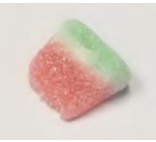
PIM obtained a federal trademark registration in “the shape of a wedge for candy, with an upper green section with white speckles, followed by a narrow middle white section and followed by a lower red section with white speckles.”

Haribo, a well-known German confectionery company, introduced its own watermelon-flavored sweet treat in 2019. Like the Sour Jacks Wedges, Haribo’s candy is red, white and green, with an elongated watermelon wedge shape. PIM sued Haribo for trademark and trade dress infringement under the Lanham Act and for unfair competition under New Jersey common law, alleging that Haribo copied PIM’s Sour Jacks Wedges design.

Haribo countered that PIM’s trade dress was functional and requested that the district court cancel PIM’s trademark. Haribo claimed that it designed its chewy candy’s shape and colors to match its flavor (watermelon) and that PIM’s trademark should not have been granted since it closely resembled an actual slice of watermelon. The district court agreed, finding that PIM’s trademark design was functional and not protectable since PIM’s combination of colors and shape helps identify the candy’s watermelon flavor. PIM appealed.

PIM acknowledged that the coloring of its watermelon candy was functional since it identified the candy’s flavor. However, PIM argued that the candy’s wedge shape identified the brand and challenged the district court’s decision because it did not consider the wedge shape in isolation from the colors when assessing functionality.

The Third Circuit rejected PIM’s argument, concluding that each feature of the candy’s trade dress serves a single function, which is to identify its flavor, and therefore is ineligible for trademark protection. The Court explained that a design is functional if it is useful for anything beyond branding. The Court cited to its 2021 decision in Ezaki Glico v. Lotte International America, explaining that “[e]ven if the design chosen both promotes a brand and also ‘makes a product work better,’ it is functional and unprotectable.” The Court went on to explain that if design choices (e.g., shape and color) serve the same function (e.g., identifying the flavor), they should be considered together.

PIM further argued that its Sour Jacks Wedges do not match exactly with watermelon, noting that the bottom could be more curved and have a thinner band of darker green, the wedge could be wider, the point could be sharper and a deeper red, and there could be black seeds. The [...]

Continue Reading


read more

RIP for POP: PTO Updates Interim Director Review Procedures

On July 24, 2023, the US Patent & Trademark Office (PTO) announced that a revised interim Director Review (DR) process and Appeals Review Panel (ARP) process will replace the Precedential Opinion Panel Process. Updates to the interim DR process include the following:

  • Expanding the process to permit parties to request DR of Patent Trial & Appeal Board decisions on institution in America Invents Act (AIA) proceedings
  • Providing updated guidance as to what types of issues the Director will consider in DR, as well as additional guidance on several topics, such as the initiation of DR at the sole discretion of the Director (sua sponte DR), remands to Board for further proceedings and the Director’s sanction authority
  • Providing the Director with the option to delegate review to a new independent panel called the Delegated Rehearing Panel (DRP)
  • Creating a new ARP, which may be convened by the Director sua sponte to review Board ex parte, reexamination or reissue appeal decisions.

Under the interim DR process, a party to a Board decision may now request DR of a Board decision, whether to institute trial, a final written decision or a decision granting a request for rehearing.

After a DR request is received and processed, the request will then be routed to an Advisory Committee that the Director has established to assist with the process. The Advisory Committee comprises 11 members and includes representatives from various PTO business units who serve at the discretion of the Director. A quorum of seven members is needed for the committee to meet. The Advisory Committee may include members from the following business units:

  • Office of the Under Secretary (not including the Director or Deputy Director)
  • The Board (not including members of the panel for each case under review)
  • Office of the Commissioner for Patents (not including the Commissioner for Patents or any persons involved in the examination of the challenged patent)
  • Office of the General Counsel
  • Office of Policy and International Affairs.

The Director will review each request for DR; the underlying decision, including the associated arguments and evidence; and the recommendation of the Advisory Committee. The Director will then determine whether to grant or deny review or delegate a decision to a Delegated Rehearing Panel (DRP). The DRP will be selected from among the Chief Judge, Deputy Chief Judge, Vice Chief Judges and Senior Lead Judges of the Board, excluding judges who served on the original panel for the case under review or otherwise have a conflict with the case. An appellant can request a rehearing of a DRP decision or appeal the decision to the US Court of Appeals for the Federal Circuit.

An ARP that consists of the Director, the Commissioner for Patents and the Chief Judge of the Board has now been created. The panel may be convened by the Director sua sponte to review ex parte, reexamination or reissue appeal decisions. Requests for ARP review will not be considered. ARP decisions are appealable to the Federal Circuit. An appellant may not [...]

Continue Reading


read more

PTO Adds Green Energy Category to Patents for Humanity Program

On March 6, 2023, the US Patent & Trademark Office (PTO) introduced a new green energy category to its Patents for Humanity Program. This new award category provides business incentives for patent applicants, holders and licensees whose inventions address the challenges of climate change through green energy innovations, including wind, solar, hydrogen, hydropower, geothermal and biofuels technologies. The green energy category joins five other categories of inventions in the Patents for Humanity Program: medicine, nutrition, sanitation, household energy and living standards.

The Patents for Humanity green energy category joins other recent PTO initiatives designed to address climate change, including a joint work-sharing program with the National Oceanic and Atmospheric Administration, expedited examination procedures under the Climate Change Mitigation Pilot Program, and a partnership with the World Intellectual Property Organization’s WIPO GREEN program.

The Patents for Humanity Award is the top award for applicants best representing the Patents for Humanity principles. Award recipients receive public recognition at an awards ceremony sponsored by the PTO. They also receive a certificate to accelerate any of the following matters before the PTO: a patent application, an ex parte reexam or an ex parte appeal to the Patent Trial & Appeal Board. Winners may transfer their acceleration certificates to third parties.

The PTO is now accepting applications for the Patents for Humanity green energy category. For more information about how to apply, visit Patents for Humanity: Green Energy. The deadline for submitting applications is June 1, 2023.


read more

Took a DNA Test, Turns Out “100% THAT BITCH” Is 100% Registrable

Addressing a refusal to register for failure to function as a trademark, the Trademark Trial & Appeal Board (Board) reversed, finding that the evidence of consumer perception of “100% THAT BITCH” did not demonstrate that the proposed mark is such a widespread and common expression that it failed to function as a source identifier. In re Lizzo LLC, Serial Nos. 88466264, 88466281 (TTAB Feb. 2, 2023) (Cataldo, Pologeorgis, Coggins, ATJ).

World-renowned, Grammy-winning artist Lizzo, through her company, Lizzo LLC, filed two applications to register 100% THAT BITCH for use in connection with clothing and related goods in International Class 25. The mark is a reference to a lyric (“I just took a DNA test, turns out I’m 100% that bitch”) from her chart-topping hit, “Truth Hurts.” The US Patent & Trademark Office (PTO) issued an office action refusing to register the mark based on failure to function as a trademark under Sections 1, 2 and 45 of the Trademark Act. Specifically, the examining attorney asserted that the phrase is a “commonplace expression widely used by a variety of sources to convey an ordinary, familiar, well-recognized sentiment.” The PTO denied the request for reconsideration, and Lizzo appealed.

In assessing a refusal to register for failure to function as a trademark, the Board must look to consumer perception of the mark; specifically, whether the mark serves merely an ornamental or informational purpose rather than a source-identifying one. In this case, the relevant consumer consists of the general public, as there were no limitations on the channels of trade or classes of consumers identified in the applications. The examining attorney argued that the evidence demonstrated only that the mark, as used on the relevant goods, portrayed “a message of self-confidence and female empowerment used by many different entities in a variety of settings”—a message that Lizzo “did not originate[,] . . . but merely popularized.”

The Board discounted much of the evidence proffered to show that the mark was ornamental as it largely all referred to Lizzo, her music and/or her song, “Truth Hurts,” demonstrating that “consumers encountering 100% THAT BITCH on the specific types of clothing identified in the application—even when offered by third parties—associate the term with Lizzo and her music.” The Board further noted that all of the evidence regarding third-party use corresponded with the release of Lizzo’s “Truth Hurts”—a correlation that suggests the term was not widely known or used until Lizzo popularized it.

Although there was no disagreement that the proposed mark conveys a “feeling of female strength, empowerment and independence,” the Board found that the record supported that “most consumers would perceive 100% THAT BITCH used on goods in the application as associated with Lizzo rather than as a commonplace expression.” Accordingly, the Board reversed the refusal to register.


read more

Supreme Court to Consider Whether Lanham Act Reaches Foreign Defendants’ Extraterritorial Conduct

The Supreme Court of the United States agreed to review the geographic scope of the Lanham Act and the extent to which trademark owners can use US trademarks to police foreign sales. Abitron Austria GmbH et al. v. Hetronic International Inc., Case No. 21-1043 (Supr. Ct. Nov. 4, 2022) (certiorari granted). The question presented is as follows:

Whether the court of appeals erred in applying the Lanham Act extraterritorially to petitioners’ foreign sales, including purely foreign sales that never reached the United States or confused U.S. consumers.

In the underlying case, the US Court of Appeals for the Tenth Circuit upheld a damages award for Hetronic International based on its conclusion that the Lanham Act can affect conduct that substantially affects US commerce, such as the products Hetronic Germany and others sold to European customers.

The US Solicitor General suggested that the case is “a suitable vehicle” to clarify the Lanham Act’s geographic scope, noting that the Lanham Act provides a remedy for a foreign defendant’s use of a US trademark abroad only if that use is likely to cause confusion within the United States.


read more

Yes, and It Counts! Single Purchase in Forum Establishes Personal Jurisdiction over Infringer

The US Court of Appeals for the Seventh Circuit affirmed exercise of personal jurisdiction over a foreign online retailer for a trademark infringement claim where the trademark owner purchased the only allegedly infringing article sold in the forum. NBA Properties, Inc. v. HANWJH, Case No. 21-2909 (7th Cir. Aug. 16, 2022) (Ripple, Scudder, JJ.)

NBA Properties owns the trademarks for the National Basketball Association (NBA) and NBA teams. HANWJH is a China-based online retailer that sells allegedly infringing NBA branded products on a well-known e-commerce site. HANWJH offered 205 allegedly infringing products that were available for purchase in Illinois, the forum state. HANWJH’s only online order in Illinois was made by an investigator for NBA Properties who purchased a pair of basketball shorts for delivery to an Illinois address. The shorts were delivered to the Illinois address before NBA Properties filed suit against HANWJH.

NBA Properties sued HANWJH for trademark infringement and counterfeiting under 15 U.S.C. § 1114 and false designation of origin under 15 U.S.C. § 1125(a) in the Northern District of Illinois. NBA Properties sought and received a temporary restraining order and preliminary injunction, including a temporary asset restraint on HANWJH’s bank account. After HANWJH failed to timely answer the complaint, NBA Properties moved for default judgment. HANWJH moved to dismiss the case for lack of personal jurisdiction, arguing the following:

  • Operating a website is not sufficient on its own to establish personal jurisdiction.
  • A single transaction by the plaintiff cannot support the exercise of personal jurisdiction.
  • Even if the exercise of personal jurisdiction were otherwise appropriate, such exercise would offend the traditional notions of fair play and substantial justice.

The district court denied HANWJH’s motion to dismiss and entered a default. HANWJH failed to object to the motion for default judgment, and the district court entered a final judgment. HANWJH appealed.

The Seventh Circuit reviewed the “minimum contacts” International Shoe criterion before turning to a more recent line of cases applying this standard to online retailers. Citing its 2020 decision in Curry v. Revolution Laboratories, the Court noted that the minimum contacts requirement is satisfied if “the defendant reasonably could foresee that its product would be sold in the forum.” The Court reasoned that allowing customers to order products from a website to the forum and then fulfilling an order to the forum can form the basis of personal jurisdiction—even when the only orders to the forum were made by the plaintiff, as long as the orders were made before filing suit. Applying these principles, the Court found that HANWJH had purposefully directed conduct at Illinois by establishing an online store, demonstrating a willingness and capacity to ship goods to Illinois and intentionally shipping an infringing product to an Illinois address. The Court explained that it was irrelevant that only a single allegedly infringing article was sold in Illinois and that it was purchased by the plaintiff, because the proper focus of the analysis was on HANWJH’s purposeful conduct. The Court also concluded that HANWJH’s [...]

Continue Reading


read more

PTO Presentation Seeks to Clarify Subject Matter Eligibility Requirements

On August 9, 2022, the US Patent & Trademark Office (PTO) gave a public presentation, “Subject Matter Eligibility Under 35 U.S.C. § 101: USPTO Guidance and Policy.” During the presentation, the PTO indicated that its goal is to identify eligible subject matter and not reject patent applications under 35 U.S.C. § 101 where possible. However, subject matter eligibility must be determined in accordance with Supreme Court precedent as set forth in Bilski v. Kappos (2010); Mayo Collaborative Servs. v. Prometheus Labs, Inc. (2012); Association for Molecular Pathology v. Myriad Genetics, Inc. (2013); and Alice Corp. v. CLS Bank International (2014). The PTO presented several biotech examples demonstrating how subject matter ineligible claims could be redrafted to encompass eligible subject matter.

The PTO presented a detailed explanation of the two-step subject matter eligibility flowchart in MPEP § 2106 and emphasized the differences between the two prongs of Step 2A. The first prong is to evaluate whether the claim recites a judicially recognized exception to eligibility. If the claims do not recite an exception, they qualify as eligible subject matter. If the claims do recite a judicial exception, the analysis proceeds to the second prong of Step 2A, which is to evaluate whether the claims recite additional elements that integrate the exception into a practical application of the exception. If the claims do recite additional elements integrating the exception into a practical application of the exception, they qualify as eligible subject matter. If the claims do not do so, the analysis proceeds to Step 2B to determine whether the claims recite additional elements that amount to significantly more than the judicial exception.

While there is significant overlap between Step 2A prong two and Step 2B, the PTO noted that under Step 2A prong two, the additional elements may be well understood, routine, conventional activity, unlike in Step 2B. For example, if conventional steps were used to affect a particular treatment or prophylaxis for a disease or medical condition, or if conventional material was used in an unconventional application, the claims would be subject matter eligible.

The PTO warned against claiming methods as a series of mental processes, mere data gathering or steps that merely apply the judicial exception.

As noted, the PTO highlighted techniques for transforming subject matter ineligible claims into subject matter eligible claims. These techniques include reciting properties that naturally occurring compositions do not possess, showing that the claimed composition possesses properties not found in naturally occurring compositions, using a conventional material or conventional method in an unconventional application and specifying a particular treatment.

Practice Note: Readers may be interested in an IP Update Legislative Alert reporting on a bill introduced by Senator Tillis to amend §101, which can be found here.


read more

PTO Proposes Standardization of the Patent Term Adjustment Statement Regarding Information Disclosure Statements

The US Patent & Trademark Office (PTO) announced on July 12, 2022, that it intends to revise the rules pertaining to patent term adjustment to require that the patent term adjustment statement regarding information disclosure statements (IDS) be submitted on a PTO form. The PTO believes that the use of the form will streamline prosecution and be more accurate and efficient by eliminating the need for a manual review of the patent term adjustment statement.

The regulations in 37 CFR 1.704(c)(1) through (14) establish the circumstances that constitute an applicant’s failure to engage in reasonable efforts to conclude processing or examination of an application and the resulting reduction of any patent term adjustment. 37 CFR 1.704(d)(1) also provides a safe harbor for filing IDS. Filing only an IDS in compliance with §§ 1.97 and 1.98 or a request for continued examination with only a compliant IDS is not considered a failure to engage in reasonable efforts to conclude prosecution (processing or examination) of the application under 37 CFR 1.704(c)(6), (8), (9) or (10) if it is accompanied by the required statement. The statement required to accompany the paper or request for continued examination must affirm that each item of information contained in the IDS meets one of the following requirements:

  • It was first cited in any communication from a patent office in a counterpart foreign or international application or from the PTO, and this communication was not received by any individual designated in § 1.56(c) more than 30 days prior to the filing of the IDS.
  • It is a communication that was issued by a patent office in a counterpart foreign or international application or by the PTO, and this communication was not received by any individual designated in § 1.56(c) more than 30 days prior to the filing of the IDS.

The PTO proposes adding new paragraph (d)(3) to 37 CFR 1.704(d), which requires filers to submit the patent term adjustment statement under 37 CFR 1.704(d)(1) on a form PTO/SB/133 to derive the safe harbor benefit under 37 CFR 1.704(d). Form PTO/SB/133 includes the required statement described above. Filers who submit a 37 CFR 1.704(d)(1) patent term adjustment statement without using the form PTO/SB/133 and filers who submit the form PTO/SB/133 with any modification to the patent term adjustment statement will not receive the benefit of the safe harbor under 37 CFR 1.704(d). Under such circumstances, the IDS or the request for continued examination, with no submission other than an IDS, will be treated as unaccompanied by a patent term adjustment statement under 37 CFR 1.704(d)(1).

Comments on the proposed rule must be received by September 12, 2022, to ensure consideration.


read more

PTO Issues Report to Congress on Patent Eligible Subject Matter

On June 24, 2022, the US Patent & Trademark Office (PTO) issued a report to Congress titled “Patent Eligible Subject Matter: Public Views on the Current Jurisprudence in the United States.” The report comes in response to a March 5, 2021, letter from Senators Tillis (R-NC), Coons (D-DE), Hirono (D-HI) and Cotton (R-AR) expressing concern over a lack of consistency and clarity in US patent eligibility laws since the Supreme Court of the United States’ rulings in Alice Corp. v. CLS Bank International and Mayo Collaborative Services Inc. v. Prometheus Laboratories Inc. The PTO solicited public feedback until October 15, 2021, and the report summarizes the PTO’s findings based on the 141 comments it received.

The report found that supporters of the current state of the law on eligibility tended to be companies faced with abusive and costly litigation involving “overbroad” patents, mostly related to software. Those companies noted that the current law allows them to avoid or more efficiently resolve abusive and costly litigation. Some high-tech representatives noted that their investments and innovations have increased under current eligibility jurisprudence. Certain life sciences and patient advocacy organizations also favored the current law, noting its role in enhancing access to medical technologies.

Respondents critical of the current state of the law included many patent practitioners and innovative companies, especially companies involved in life sciences. These respondents stated that current law makes patents less available and rights less predictable and has inhibited investment in new technologies and companies. Several startups and small- and medium-sized enterprises also noted that the current law undermines innovation by decreasing the availability of private risk capital and works to concentrate markets in the hands of a few large, well-resourced entities, thereby decreasing competition. Some commenters stated that they no longer seek patents and instead rely on trade secrets, resulting in reduced public disclosure of technological innovations.

The PTO will continue to solicit feedback from stakeholders, including through listening sessions. The PTO noted that additional feedback and suggestions may be sent to 101@uspto.gov.


read more

Clarification or Raising the Bar? PTO Director Issues New Guidance for Discretionary PTAB Denials

On June 21, 2022, US Patent & Trademark Office (PTO) Director Katherine K. Vidal issued a memorandum addressing interim procedures for discretionary denials in America Invents Act (AIA)-post grant proceedings at the Patent Trial & Appeal Board (Board). In 2020, in order to minimize the potential conflict between the Board and parallel district court proceedings, the PTO designated the Board’s opinion in Apple v. Fintiv as precedential. Since Fintiv, the Board has issued several discretionary denials of institution based on parallel proceedings in district (and in some cases other administrative) courts. Director Vidal’s memo seeks to provide additional guidance on the PTO’s interpretation of Fintiv and its progeny and addresses multiple factors that were previously left to individual administrative law judge (ALJ) interpretation.

The memo includes rendering an initial evaluation of the merits of the petition. In particular, the Board will not deny institution of an inter partes review (IPR) or post-grant review (PGR) under Fintiv when a petition presents compelling evidence of unpatentability. This standard is higher than the institution standard, which requires only that “there is a reasonable likelihood that petitioner would prevail with respect to at least 1 of the claims challenged in the petition.” While the memo does not elaborate on the evidence required to meet this compelling standard, numerous decisions were cited as illustrative. (See: e.g., Illumina Inc. v. Trs. of Columbia Univ., IPR2020-00988, Paper 20 (PTAB Dec. 8, 2020); Synthego Corp. v. Agilent Techs., Inc., IPR2022-00402, Paper 11 (May 31, 2022); Samsung Elecs. Co. v. Scramoge Tech., Ltd., IPR2022-00241, Paper 10 (June 13, 2022).)

Additionally, Director Vidal confirmed that Fintiv does not apply to parallel proceedings before the International Trade Commission nor where there has been a stipulation not to pursue the same grounds in a district court proceeding. The stipulation applies to grounds that are actually raised in the petition and any grounds that could have reasonably been raised in the petition, suggesting that there may be some dispute later in the district court proceeding about what grounds “could have reasonably been raised in the petition.”

Finally, the memo clarified the second factor of the Fintiv analysis: the speed with which the district court case may go to trial and be resolved. The Board will consider not only the scheduled trial date, but also the median time-to-trial for the particular district court, number of cases before the specific district court judge and the speed and availability of other dispositions.

Practice Note: While the standard for institution has not changed, the new compelling standard effectively ups the bar for any IPR, PGR or covered business method (CBM) proceedings where there is a parallel district court case. Prior to filing a new petition, patent challengers should objectively weigh the merits of their challenge or consider stipulating not to pursue the same invalidity grounds in the parallel district court proceeding.


read more

STAY CONNECTED

TOPICS

ARCHIVES