
Results for "International Trademark"
Subscribe to Results for "International Trademark"'s Posts

USPTO elevates precedential and informative decisions on discretionary institution in IPR/PGR

The United States Patent and Trademark Office (USPTO) designated four decisions as precedential and nine decisions as informative, all highlighting the factors the USPTO will consider in determining whether to deny a petition for inter partes review (IPR) or post-grant review (PGR) based on discretionary considerations.

Although the individual outcomes differ among the four precedential decisions (two granting institution and two denying), the decisions provide insight on how the USPTO will exercise its discretion to institute and deny America Invents Act (AIA) trials based on timing, copycat petitions and joinder, sequential petitions, and policy preference for PGR availability. The USPTO designated the following decisions precedential:

The USPTO designated the following decisions as informative, illustrating the types of factual scenarios that may support either discretionary denial of a petition or, conversely, a decision to consider the petition on the merits.

Together, these informative decisions provide concrete, real‑world examples of how the Director is likely to applies discretion under 35 USC §§ 314(a) and 324(a), ranging from circumstances where institution is disfavored (e.g., parallel litigation dynamics, petition quality, procedural posture) to situations where the USPTO [...]

Continue Reading


read more
USPTO launches SEP Working Group aimed at strengthening patent enforcement

The United States Patent and Trademark Office (USPTO) announced the formation of the Standard-Essential Patent (SEP) Working Group, which will report directly to USPTO Director John A. Squires. The initiative aims to examine policy issues related to patents incorporated into technical standards and provide guidance on enforcement and licensing practices.

Background

Technical standards underpin many modern technologies, including telecommunications, automotive systems, and artificial intelligence. These standards often include patented technologies, which represent significant investment by inventors. Concerns have emerged about the predictability of remedies and the treatment of patent holders within the SEP ecosystem.

Historically, injunctions in SEP disputes have been difficult to obtain in the United States because SEP patents are typically subject to fair, reasonable, and non-discriminatory (FRAND) commitments. FRAND obligations are intended to ensure broad access to standardized technologies, but they often create uncertainty around enforcement and limit the availability of injunctive relief. This tension has led to debates over whether SEP holders can effectively prevent infringement when licensing negotiations fail.

Recent USPTO actions

The USPTO’s announcement follows its recent involvement in cases addressing patent remedies, in which the USPTO argued that injunctions should be available for SEP patents. In Radian Memory Systems v. Samsung Electronics, the USPTO filed a statement emphasizing the role of injunctions in protecting patent rights. Similarly, in an International Trade Commission investigation involving dynamic random-access memory (DRAM) devices, the USPTO commented on the public interest in enforcing valid patents. Both of these cases involved the assertion of SEP patents.

Objectives of the SEP Working Group

The working group will focus on three areas:

  1. Clarifying enforcement standards: Reviewing approaches to ensure strong and predictable remedies for SEP holders.
  2. Encouraging broader participation: Exploring ways to enable small and medium-sized enterprises to engage in standards development.
  3. Stakeholder engagement and transparency: Creating dialogue with patent holders, implementers, and standards organizations to identify challenges and develop resources for licensing predictability.

USPTO Deputy General Counsel Nicholas Matich and Senior Legal Advisor Austin Mayron will co-chair the working group. The group will seek input from stakeholders across the innovation ecosystem.

Next steps

The USPTO intends for this initiative to formalize its recent policy efforts and provide a structured approach to SEP-related issues. Stakeholders are encouraged to participate in discussions as the group begins its work.


read more

Deadlines and discretion: Appeal trips over the clock

The US Court of Appeals for the Federal Circuit affirmed in part and dismissed in part an appeal of an International Trade Commission decision. The Federal Circuit affirmed the Commission’s issuance of a limited exclusion order against one set of respondents and dismissed the complainant’s appeal of the Commission’s no‑violation finding against another set of respondents as time‑barred under the statute. Crocs, Inc. v. Int’l Trade Comm’n, Case No. 2024-1300 (Fed. Cir. Jan. 8, 2026) (Stoll, Lourie, Chun, JJ.)

Crocs filed a complaint with the Commission alleging that multiple respondents violated Section 337 by importing, selling for importation, or selling within the US footwear that infringed its registered trademarks (the 3D marks), which are associated with certain features of Crocs’ Classic Clog shoes. Crocs’ complaint requested relief in the form of a general exclusion order (GEO), or in the alternative, a limited exclusion order (LEO). Three respondents participated in an evidentiary hearing before an administrative law judge in September 2022 (active respondents) while four respondents were in default and waived their rights to appear, to be served with documents, and to contest the allegations (defaulting respondents). More than 20 other respondents were terminated based on consent orders or settlement agreements.

In a September 14, 2023, Notice of Final Determination and accompanying opinion, the Commission found no violation by the active respondents, concluding that Crocs had not established likelihood of confusion, infringement, or dilution of the 3D marks. The Commission, presuming the facts alleged in the complaint as true and finding that public interest factors do not preclude relief, also issued an LEO against the defaulting respondents, barring them from importing the infringing shoes.

On December 22, 2023, Crocs filed a notice of appeal challenging the Commission’s no-violation finding as to the active respondents and its decision to issue only an LEO against the defaulting respondents rather than the GEO that Crocs requested. The Commission countered that Crocs’ appeal against the active respondents was time-barred by Section 337(c), which required the appeal to be filed by November 13, 2023, and argued that the Commission did not abuse its discretion in issuing only an LEO against the defaulting respondents.

The Federal Circuit dismissed Crocs’ appeal against the active respondents as untimely. The Court explained that when the Commission issues a single decision that contains a no-violation finding against one set of respondents and enters an exclusion order against another set of respondents, each ruling carries its own deadline for appeal. In this case, Crocs’ December 22, 2023, appeal was time-barred under Section 337(c) because the 60-day period for filing a notice of appeal on the no-violation finding expired on November 13, 2023. The Court also considered and upheld the Commission’s LEO order, concluding that the Commission had articulated a sufficient basis for the remedy and that its decision was not arbitrary, capricious, an abuse of discretion, or otherwise contrary to law.


read more

Double trouble: Proposed IPR institution changes would limit duplicative proceedings

The United States Patent and Trademark Office (USPTO) proposed changes to the rules governing inter partes reviews (IPRs) before the Patent Trial & Appeal Board, including setting limits on use of IPR proceedings for patent claims that have already been challenged in a prior proceeding. According to the USPTO, the proposal is aimed at preventing duplicative litigation against patent holders and promoting fairness, efficiency, and predictability in patent disputes.

The Notice of Proposed Rulemaking introduces changes to 37 C.F.R. § 42.108 that would bar the institution of IPRs in cases where:

  • A petitioner refuses to stipulate that it won’t pursue invalidity challenges under §§ 102 or 103 in other venues, such as a district court or the US International Trade Commission (ITC).
  • The challenged claims were found not invalid or not unpatentable in a prior district court, ITC, Board reexamination, or Federal Circuit proceeding.
  • Parallel litigation involving the patent will likely reach a decision before the final IPR written decision.

The proposed rule would provide an exception to the proposed IPR limitations in “extraordinary circumstances,” such as a bad faith institution of a previous IPR or a substantial change in law that renders a prior challenge irrelevant.

The USPTO explained that the proposed changes will offer greater certainty for patent owners by reducing serial validity challenges, improving judicial efficiency by minimizing duplicative proceedings, and facilitating lower litigation costs and stronger investment incentives. The USPTO noted that the changes would benefit smaller technology companies, which often lack the litigation resources of larger companies and are more vulnerable to the effects of weaker patent rights.

The proposed changes would represent a significant shift in the availability of IPR for petitioners and would alter the timing and strategy of decisions about whether to pursue an IPR. Comments on the proposed rule changes are due by November 17, 2025, and can be submitted via the federal eRulemaking portal.


read more

Guiding the Fight Against Fakes: PTO Opens Public Comment Period

The US Patent & Trademark Office (PTO) issued a notice inviting feedback from intellectual property rights holders and online marketplaces regarding proposed voluntary guidelines aimed at curbing the sale of counterfeit goods on online marketplaces. 90 Fed. Reg. 21291 (May 19, 2025). Public comments will be accepted through June 27, 2025.

The PTO will also hold a public hearing in Washington, DC, on June 5, 2025, to solicit feedback on newly drafted guidelines, which were developed by the Organization for Economic Cooperation and Development (OECD) and focus on key enforcement areas, including repeat infringers, international cooperation, transparency, public awareness, sanctions, and market surveillance. The PTO emphasized that it is working with both government and private sector partners to strengthen efforts against counterfeiting, which has become increasingly prevalent in e-commerce.

According to a recent report by the OECD and the EU Intellectual Property Office, the global trade in counterfeit goods reached $467 billion in 2021, with apparel, footwear, and leather goods constituting the most-seized items. The report identified China and Hong Kong as the top sources of counterfeit products.

The OECD’s anticounterfeiting initiative follows a three-phase approach:

  • Defining the scope of the problem and outlining a strategic response
  • Developing voluntary guidelines to combat illicit trade
  • Facilitating global dialogue among public and private stakeholders to refine and implement best practices

The PTO’s June 5 hearing marks the start of the OECD’s third phase: facilitating dialogue between public and private stakeholders. Additional hearings will be held in other countries as part of this global effort.

The hearing comes on the heels of high-profile enforcement efforts, including a recent federal court order in Illinois that extended a freeze on assets linked to overseas sellers accused of distributing counterfeit National Basketball Association merchandise.

The PTO hopes the hearing will help refine the proposed best practices and identify remaining gaps, as policymakers and industry leaders work together to combat the growing threat of illicit online trade.


read more

It’s a Matter of Timing: The PTO’s Latest Decisions on Discretionary Denials

Since the US Patent & Trademark Office’s (PTO) decision to rescind former Director Vidal’s memo on procedures for post-grant proceedings where there is parallel district court litigation, Current Acting Director Coke Morgan has issued four decisions regarding requests for discretionary denials:

  • Twitch Interactive, Inc. v. Razdog Holdings LLC, IPR2025-00307; 00308, Paper 18 (P.T.A.B. May 16, 2025)
  • Amazon.com v. NL Giken, Inc., IPR2025-00250; 00407, Paper 14 (P.T.A.B. May 16, 2025)
  • Arm Ltd. and Mediatek, Inc. v. Daedalus Prime LLC, IPR2025-00207, Paper 10 (P.T.A.B. May 16, 2025)
  • Ericsson and Verizon Wireless v. Procomm International, IPR2024-01455, Paper 15 (P.T.A.B. May 16, 2025).

The Director ultimately granted two of the requests and denied the other two.

In Twitch Interactive v. Razdog Holdings LLC, the PTO denied the patent owner’s request for discretionary denial. The parallel district court proceeding did not have a scheduled trial date, and the projected trial date was far beyond the PTO’s final written decision date. The petitioner also provided statistical evidence that the district court would likely issue a stay for the pending inter partes review (IPR) proceeding. Therefore, based on a holistic assessment of the evidence presented, the PTO denied the request for discretionary denial.

In Amazon.com v. NL Giken, Inc, the PTO similarly denied the patent owner’s request for discretionary denial. Here, the issue date for the PTO’s final written decision fell before the parallel district court trial date. The abundance of time between the dates ultimately led to the PTO’s denial.

In contrast, in Arm Ltd. and Mediatek, Inc. v. Daedalus Prime LLC, the PTO granted the patent owner’s request for discretionary denial. The PTO highlighted that it was unlikely that its final written decision would be issued before the start of the district court trial. There also was a lack of probative evidence that the district court would issue a stay if an IPR proceeding was instituted.

Finally, in Ericsson and Verizon Wireless v. Procomm International, the PTO granted the patent owner’s request for discretionary denial. The PTO found that the district court trial would conclude before a final written decision was issued in the IPR proceedings, because the trial date preceded the final written decision date by nine months. Moreover, there was no evidence to support any contention that the district court would issue a stay.

Practice Note: These four decisions emphasize the importance of timing between post-grant proceedings and parallel district court litigation. The PTO is more likely to grant discretionary denial if the final written decision of the post-grant proceeding is issued after the trial concludes in the parallel district court action. If a final written decision is likely to be issued before the trial begins in the parallel proceeding, the PTO is more likely to deny a request for a discretionary denial.


read more

No Green Light to Register Color Mark for Medical Gloves

Addressing for the first time the test for determining whether a color mark is generic, the US Court of Appeals for the Federal Circuit adopted the Trademark Trial & Appeal Board’s Milwaukee test as the appropriate standard, affirming the Board’s determination that a dark green color mark used on medical examination gloves was generic. In re PT Medisafe Technologies, Case No. 2023-1573 (Fed. Cir. Apr. 29, 2025) (Prost, Clevenger, Stark, JJ.)

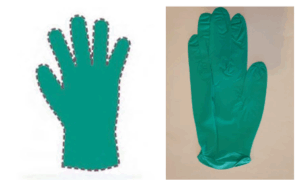
PT Medisafe filed an application to register a dark green color mark for use in connection with medical examination gloves:

The US Patent & Trademark Office (PTO) examining attorney refused registration, alleging that the mark was not inherently distinctive and therefore required a showing of acquired distinctiveness. In response, Medisafe submitted evidence in support of acquired distinctiveness, including a declaration from a Medisafe vice president, promotional literature, and examples of competitive goods. The examining attorney was not swayed, issuing another office action stating that the mark had not acquired distinctiveness and was generic. Medisafe submitted additional evidence in support of acquired distinctiveness, including additional declarations, but the examining attorney ultimately issued a final office action refusing registration.

On appeal, the Board applied a two-step test to determine whether the applied-for color mark was generic:

  • What is the genus of the goods or services at issue?
  • Is the color “so common within the relevant genus that consumers would primarily associate it with the genus rather than as indicating a unique source of goods [or services] within the genus?”

This test, which was first articulated in the Board’s 2019 decision in Milwaukee Electric Tool v. Freud America, is a “slight variation” of the standard test for genericness set forth in the Federal Circuit’s 1986 decision in H. Marvin Ginn v. International Ass’n of Fire Chiefs, modified for use specifically with color marks.

The Board found that the appropriate genus was “all chloroprene medical examination gloves” and the relevant public included “all such people or businesses who do or may purchase chloroprene medical examination gloves.” The Board likewise agreed with the examining attorney that the color mark was generic because “it is so common in the chloroprene medical examination glove industry that it cannot identify a single source.”

The Board cited 25 examples of third parties using the same or a similar dark green color on medical examination gloves. Medisafe claimed that 15 of those 25 examples were Medisafe gloves, but the Board nonetheless affirmed the refusal, noting that “Medisafe made no such claim as to the other 10,” and “all 25 screenshots [are] probative of genericness because the relevant consumer – even including unspecified ‘authorized resellers’ – could be exposed to . . . gloves that appear under a large number of third-party marks without identifying [Medisafe] as the source or manufacturer.” Medisafe appealed to the Federal Circuit.

Medisafe argued that the Board applied the wrong standard in determining that [...]

Continue Reading


read more

Fintiv Guidelines for Post-Grant Proceedings Involving Parallel District Court Litigation

On March 24, 2025, the US Patent & Trademark Office (PTO) released new guidance that clarifies application of the Fintiv factors when reviewing validity challenges simultaneously asserted at the Patent Trial & Appeal Board and in district court or at the US International Trade Commission.

This guidance follows the PTO’s February 28, 2025, announcement reverting to its previous guidelines for discretionary denials of petitions for post-grant proceedings where district court litigation is ongoing. That announcement rescinded the PTO’s June 21, 2022, memorandum entitled “Interim Procedure for Discretionary Denials in AIA Post-Grant Proceedings with Parallel District Court Litigation,” which prevented the Board from rejecting validity challenges where there was “compelling evidence of unpatentability.”

Based on the new guidance, the Board is more likely to defer to the district court or the Commission if the Commission’s projected final determination date is earlier than the deadline for the Board’s final written decision. The PTO pointed out that a patent challenger’s stipulation not to raise the same invalidity arguments in other proceedings if the PTO institutes an inter partes review or post grant review is highly relevant but not dispositive.

This change in policy increases the likelihood that the Board will grant discretionary denials in situations involving parallel district court or Commission proceedings.


read more

Assessing Inputs: Determining AI’s Role in US Intellectual Property Protections

The US Patent & Trademark Office (PTO) issued additional guidance on the contribution of artificial intelligence (AI) in its January 2025 AI Strategy. Similarly, the US Copyright Office issued part two of its “Copyright and Artificial Intelligence” report, addressing the copyrightability of AI- or partially AI-made works. Both agencies appear to be walking a fine line by accepting that AI has become increasingly pervasive while maintaining human contribution requirements for protected works and inventions.

In its published strategy, the PTO states that its vision is to unleash “America’s potential through the adoption of AI.” The strategy describes five focus areas:

  • Advancing the development of intellectual property policies that promote inclusive AI innovation and creativity.
  • Building best-in-class AI capabilities by investing in computational infrastructure, data resources, and business-driven product development.
  • Promoting the responsible use of AI within the PTO and across the broader innovation ecosystem.
  • Developing AI expertise within the PTO’s workforce.
  • Collaborating with other US government agencies, international partners, and the public on shared AI priorities.

The PTO stated that it is still evaluating the issue of AI-assisted inventions but reaffirmed its February 2024 guidance on inventorship for AI-assisted inventions. That guidance indicates that while AI-assisted inventions are not categorically unpatentable, the inventorship analysis should focus on human contributions.

Likewise, the Copyright Office discussed public comments regarding AI contributions to copyright, weighing the benefits of AI in assisting and empowering creators with disabilities against the harm to artists working to make a living. Ultimately the Copyright Office affirmed that AI, when used as a tool, can generate copyrightable works only where a human is able to determine the expressive elements contained in the work. The Copyright Office stated that creativity in the AI prompt alone is, at this state, insufficient to satisfy the human expressive input required to produce a copyrightable work.


read more

It’s an Old Tune: Third-Party-Use Evidence From Long Ago Can Support Genericness

The US Court of Appeals for the Fifth Circuit found that the district court abused its discretion in wholesale exclusion of evidence on the issue of genericness. The evidence was offered to show prior use of a trade dress from more than five years prior to an alleged infringer’s first use of a mark. Gibson Inc. v. Armadillo Distribution Enterprises, Inc., Case No. 22-40587 (5th Cir. July 8, 2024) (Stewart, Clement, Ho, JJ.)

Gibson filed trademark infringement and counterfeiting claims against Armadillo Distribution Enterprises in 2019, alleging that Armadillo infringed four of Gibson’s trademarked guitar body shapes, one guitar headstock shape and two word marks. Just before trial, the district court made several evidentiary rulings on the parties’ motions in limine, including one in which Gibson sought to exclude all arguments and evidence related to advertisements or sales of third-party guitars before 1992, arguing they had limited probative value and were unduly prejudicial. Gibson argued that any third-party-use evidence should be restricted to a five-year period from 1992 to 1997. In its first exclusion order, the district court found that evidence of third-party use was relevant to determining whether a mark was generic or unprotectable but concluded that the probative value of the evidence from before the 1990s was low and found that the five-year cutoff date was reasonable. Armadillo objected to that ruling, leading to oral argument and a second exclusion order upholding the first order. The district court relied on Federal Rule of Evidence (FRE) 403 and the 2018 Federal Circuit ruling in Converse v. International Trade Commission to support this wholesale exclusion of evidence prior to 1992.

The parties proceeded to trial in mid-2022. A jury found that Armadillo infringed all of the trademarks other than one word mark and found that Armadillo marketed counterfeits. Armadillo appealed based on the district court’s exclusion of decades of third-party-use evidence. Armadillo asserted that this evidence was central to Armadillo’s counterclaim seeking cancellation of the marks and its main defense of genericness.

The Fifth Circuit first considered the district court’s reliance on Converse and determined that the district court abused its discretion in excluding the third-party evidence predating 1992. Armadillo argued that reliance on Converse was error because that case concerned secondary meaning and not genericness. Gibson countered that genericness and secondary meaning are closely related issues and that the five-year period predating infringement is the most logical measuring line. Alternatively, Gibson argued that 15 U.S.C. § 1064 would bar evidence predating 1992 because it provides that a petition to cancel a mark’s registration must be filed within five years from the date of registration of the mark.

The Fifth Circuit found that Converse did not rule that third-party-use evidence from more than five years prior to the alleged infringer’s first use was irrelevant to the issue of genericness and did not compel a strict five-year limitation of third-party-use evidence. The Court further reasoned that under Converse, evidence of prior use is relevant if such use was likely to have [...]

Continue Reading


read more

STAY CONNECTED

TOPICS

ARCHIVES