
Results for "Copyright"
Subscribe to Results for "Copyright"'s Posts

When Are Compulsory Copyright Licenses Compulsory?

The US Court of Appeals for the Second Circuit partially affirmed a district court’s summary judgment order holding that audiovisual recordings of live concerts do not fall within the scope of the Copyright Act’s compulsory license provision while purchasers of audio-only recordings obtain a compulsory license in the copyright of the work fixed by their predecessors/sellers. ABKCO Music, Inc. et al. v. Sagan et al., Case No. 20-3816 (2d Cir. Oct. 6, 2022) (Jacobs, Wesley, Menashi, JJ.)

In 2002, William Sagan purchased, through Norton, a collection of audio and audiovisual live concert recordings from Bill Graham Archives. All three parties are named defendants in this case. The agreement conveyed all intellectual property that the Archives held (from a transaction with Sagan) and included a disclaimer stating that record company and artist approval was required to exploit the recordings. The defendants’ subsequent purchases of other recordings contained similar limited assurance language regarding intellectual property rights. In 2006, the defendants made the entire collection publicly available online for a streaming and downloading fee. A year later, the defendants began using a third-party licensing agent to obtain compulsory licenses under 17 USC § 115 and negotiated licenses from plaintiff music publishers in the audio and audiovisual live concert recordings.

Section 115 of the Copyright Act requires persons seeking to make and distribute phonorecords of a previously published musical work to obtain a compulsory license by providing notice to the copyright owner before distribution and paying government-prescribed royalties. (§ 115(a)(1), (b), (c).) The Copyright Act defines phonorecords as “[m]aterial objects in which sounds, other than those accompanying a motion picture or other audiovisual work, are fixed.” (§ 101.) Section 115’s substantive requirements for duplications of audio/sound recordings fixed by another include requirements that the sound be fixed lawfully, and that duplication be authorized by the copyright owner. (§ 115(a)(1).)

In 2015, the music publishers sued defendants for copyright infringement of 197 musical works posted online without valid compulsory licenses. The music publishers alleged that the defendants did not obtain compulsory licenses for audiovisual works as required by § 115 and that the defendants failed to comply with § 115 substantive compulsory licensing requirements for audio-only works. Defendants argued implied license and equitable estoppel as affirmative defenses. The publishers sought damages and a permanent injunction pursuant to the Copyright Act.

The district court, on summary judgment, ruled that the defendants had no valid license authorizing the reproduction and distribution of the musical works in either audio or audiovisual format, that the defendants had neither an implied license nor any basis for estoppel, and that Sagan (a principal in several of the defendant streaming services) was liable for direct infringement. The district court denied the publishers’ request for an injunction but granted the publishers an award of attorneys’ fees. The defendants appealed from the summary judgment order and the order granting fees and costs. The plaintiffs cross-appealed denial of an injunction.

The Second Circuit affirmed the district court’s holding that the defendants infringed each musical work [...]

Continue Reading


read more
Don’t Throw in the Towel: Retroactive Copyright Protects Fight Live Stream

The US Court of Appeals for the Sixth Circuit reversed a district court’s summary judgment of noninfringement in a copyright dispute, finding that the transfer of ownership prior to the display of the copyrighted work conferred standing to sue for any alleged infringement. Joe Hand Promotions, Inc. v. Griffith, Case No. 21-6088 (6th Cir. Sept. 21, 2022) (Clay, Rogers, Stranch, JJ.)

On August 26, 2017, world-famous boxer Floyd Mayweather Jr. and famous mixed martial arts fighter Conor McGregor engaged in what became one of the most legendary fights of all time (Fight). Showtime produced the Fight, charging a $99.99 personal use license and more expensive commercial streaming licenses for public viewing in a commercial setting. Two months prior to the event, on June 20, 2017, Showtime entered into a distribution agreement with Mayweather Promotions granting an exclusive license “to exhibit and distribute, and authorize the exhibition and distribution” of the Fight in a defined territory via the internet. On August 1, 2017, Mayweather in turn entered into a Commercial Licensing Agreement with Joe Hand Promotions (JHP), a smaller distributor. The agreement granted “the sole and exclusive third party license … to distribute … and authorize the public exhibition of the [Fight]” in a designated area. JHP then promoted the event and sold commercial licenses authorizing live broadcast at bars and restaurants.

There was no copyright registration at the time the Fight aired. However, the Copyright Act allows registration of live events within three months, and Showtime applied for a copyright within two months. On November 21, 2017, Showtime signed a Copyright Agreement with JHP, granting JHP “the exclusive right to distribute and publicly perform the [Fight] live on August 26, 2017,” “the exclusive right … to take enforcement actions,” and “the right and standing, as exclusive assignee, to assert independent claims, solely in the name of [JHP], for copyright infringement.” Mayweather Promotions, although a nonparty, also signed.

JHP then sued several restaurants, including Griffith, which livestreamed the Fight in a public setting without paying the commercial license fee. Griffith had paid for a personal use license, but then used an HDMI cable to connect a personal device to a TV and broadcast the live show in the restaurant. Griffith also promoted the Fight on the restaurant’s Facebook page and charged a $6 entry fee for patrons to watch the Fight. Both parties filed cross-motions for summary judgment. The district court granted Griffith’s motion, finding no evidence of copyright ownership on the day of the Fight. The court found that because the Copyright Agreement granted rights retroactively, JHP was granted a mere right to sue, which was insufficient for ownership. JHP appealed.

Griffith argued on appeal that because there was no copyright registration at the time of the event, any exclusive rights granted by the Copyright Agreement were illusory and insufficient to establish ownership. In response, JHP argued that Showtime intended such retroactive grant of rights, as evidenced by the Commercial Licensing Agreement with Mayweather Promotions. The Sixth Circuit agreed with [...]

Continue Reading


read more

Implied Copyright License to Photographs of Artist Formerly Known as Prince

The US Court of Appeals for the Eighth Circuit upheld a ruling that a marketer had an implied copyright license to distribute marketing materials containing digital copies of photographs of the late musical artist Prince. Beaulieu v. Stockwell, Case No. 21-3833 (8th Cir. Aug. 30, 2022) (Gruender, Benton, Grasz, JJ.)

Allen Beaulieu was Prince’s personal photographer for five years, taking thousands of photos during multiple world tours. Beaulieu registered a copyright for these photos in 1984. In 2014, Beaulieu decided to publish a book of his photos. He hired (and entered into contracts with) Thomas Crouse to write and publish the book and Clint Stockwell to assist in scanning and storing digital copies of the photos. There was significant interest in the book after Prince’s death in 2016. In May 2016, Beaulieu gave Stockwell an unknown number of uncatalogued photos to be digitized. At about the same time, Stockwell sent a press packet containing a digital photo slideshow and press release to potential investors, including Charles Sanvik.

The collaboration with Stockwell and the others eventually fell apart, and Beaulieu demanded his photos back. Beaulieu’s lawyer retrieved some of the photos from Stockwell’s home, but Beaulieu did not make an inventory of the photos that were returned. Beaulieu sued Stockwell, Crouse and Sanvik for copyright infringement (among various other property torts). The district court granted summary judgment to the defendants on all claims and found that Stockwell had an implied license to create and distribute the press release containing Beaulieu’s photos. Beaulieu appealed.

Addressing Beaulieu’s copyright claim, the Eighth Circuit focused on the district court’s finding of an implied license. An implied license is an affirmative defense to a copyright infringement claim. The Court explained that a nonexclusive implied license may be found where a person requests the creation of a work, the creator makes the particular work and delivers it to the person who requested it, and the licensor intends that the licensee-requestor copy and distribute the work. The Court also explained that such an implied license could be implied from conduct. The Court recounted the details of the contract between Beaulieu and Stockwell, which included provisions permitting the use of the digital photos for “promotional and marketing” purposes. The Court also noted that Beaulieu was informed of the marketing plans and was sent drafts of the marketing emails, including the digital photo slideshow, to which Beaulieu did not object. The Court found that Beaulieu’s receipt of these materials, along with his continuing interactions with the collaborators thereafter, implied his approval of the marketing plan and demonstrated an implied license to the photographs.


read more

Seeing Starz: No Damages Bar in Copyright Discovery Rule Case

The US Court of Appeal for the Ninth Circuit affirmed a district court’s denial of a motion to dismiss copyright infringement claims as barred by the statute of limitations, affirming the copyright owner’s right to sue even though more than three years had passed since the alleged infringement occurred. Starz Entertainment, LLC v. MGM Domestic Television Distribution, LLC, Case No. 21-55379 (9th Cir. July 14, 2022) (Wardlaw, Ikuta, Bade, JJ.)

Starz entered into licensing agreements for movies and television series episodes with MGM in 2013 and 2015. Under the agreements, MGM granted Starz the exclusive right to exhibit the movies and television series episodes for specified time periods. MGM agreed that it would not exhibit or license the content to any third parties during such specified time periods. From 2019 to 2020, Starz discovered that certain content it licensed from MGM was available on other streaming platforms.

Starz sued MGM in May 2020, asserting 340 claims of direct, contributory and vicarious copyright infringement, among other claims. MGM moved to dismiss, arguing that Starz’s copyright infringement claims were barred by the Supreme Court’s 2014 decision in Petrella v. MGM. MGM asserted that Petrella imposes a strict bar to collecting any damages for copyright infringement that occurs more than three years prior to the filing of the complaint. The district court determined that Petrella did not affect the discovery rule (i.e., that under the Copyright Act there exists a three-year damages bar) except when the plaintiff reasonably was not aware of the infringements at the time they occurred. MGM filed an interlocutory appeal.

The Copyright Act states: “No civil action shall be maintained under the provisions of this title unless it is commenced within three years after the claim accrued.” The issue on appeal here was when a copyright infringement claim accrues. The Ninth Circuit noted that it, and every other circuit, has an exception to the infringement rule, known as the “discovery rule,” which starts the clock when a copyright holder knows or reasonably should know that an infringement occurred. The Court disagreed with MGM that Petrella did away with the discovery rule. Instead, the discovery rule of accrual copyright claims is alive and well, and thus the Court affirmed the district court’s finding that Starz was not barred by Petrella from bringing a lawsuit.

The Ninth Circuit next addressed the issue of whether Petrella imposed a damages bar separate from the statute of limitations. MGM argued that Petrella created a separate damages bar that limits damages to damages arising from acts of infringement within the three-year window. The Court found that a three-year lookback period would eviscerate the discovery rule and explained that MGM’s approach is a textbook example of the absurdity of such a rule. The agreements between Starz and MGM covered hundreds of titles under separate time periods, and under MGM’s approach, damages could only be recovered for a 2013 infringement if the complaint was filed by 2016. In this case, Starz did not discover [...]

Continue Reading


read more

Copyright Claim in Digital Message Format Fizzles Out

The US Court of Appeals for the Third Circuit found that digital message formats and messages generated using those formats were not copyrightable and thus vacated a preliminary injunction against an alleged infringer marketing a competing product using the same format and messages. Pyrotechnics Management Inc. v. XFX Pyrotechnics LLC et al., Case No. 21-1695 (3d Cir. June 29, 2022) (Hardiman, Nygaard, Fisher, JJ.)

Pyrotechnics, a manufacturer of hardware and software for fireworks displays, developed a system for controlling fireworks displays. The system contains a control panel that accepts user input and creates messages that it sends to field modules, which decode the messages and perform the desired task (e.g., igniting a firework). FireTEK reverse-engineered Pyrotechnics’ hardware to learn its communication protocol and, in 2018, developed a router that could send the same messages to Pyrotechnics’ field modules as the Pyrotechnics control panel. FireTEK marketed its router as a replacement for Pyrotechnics’ control panel.

In 2019, Pyrotechnics filed a deposit copy document with the US Copyright Office describing the communication protocol used in its fireworks control panel. Pyrotechnics’ communication protocol includes three components: a custom digital message format, specified individual messages that conform to the format and communicate specific information and a transmission scheme describing how individual digital messages are converted into a format that can be sent over the wires that connect the control panel to the field modules. The deposit copy also identified four specific messages (each a series of 12 bytes) that used Pyrotechnics’ digital message format. The Copyright Office issued a certificate of registration.

Pyrotechnics filed suit against fireTEK for copyright infringement, claiming that fireTEK violated Pyrotechnics’ copyright in the communication protocol it uses to control fireworks displays. Pyrotechnics sought and received a preliminary injunction from the district court enjoining fireTEK from selling or distributing its allegedly infringing router. FireTEK appealed.

FireTEK contested the district court’s likelihood of success finding, arguing that Pyrotechnics’ copyright in its communication protocol was invalid. The Third Circuit agreed, finding that neither the digital message format used by Pyrotechnics in its communication protocol nor the individual messages conforming to that format were copyrightable.

Turning first to Pyrotechnics’ digital message format, the Third Circuit found that the format was an uncopyrightable idea, not a protectable expression of ideas. Relying heavily on its 1986 decision in Whelan Assocs. v. Jaslow Dental Lab’y, the Court explained that “the purpose or function of a utilitarian work is the work’s idea.” For Pyrotechnics’ communication protocol, the purpose and function of the protocol (and therefore its idea) was to enable Pyrotechnics’ control panel and field modules to communicate with each other. As the Court explained, the digital message format created by Pyrotechnics was an essential part of that idea, and there was no other means of achieving the purpose of the communication protocol (permitting communication between the control panel and field modules) without using Pyrotechnics’ digital message format. Therefore, the Court determined that Pyrotechnics’ digital message format was part of an uncopyrightable idea.

The Third Circuit also [...]

Continue Reading


read more

So You Wanna Play with Copyright? “Joyful Noise” Ostinato Isn’t Original Expression

The US Court of Appeals for the Ninth Circuit affirmed a district court’s order vacating a jury award of damages for copyright infringement and granting judgment as a matter of law, explaining that the musical work alleged to have been copied did not qualify as an original work of authorship but consisted only of “commonplace musical elements.” Marcus Gray PKA Flame et al. v. Katheryn Elizabeth Hudson PKA Katy Perry et al., Case No. 20-55401 (9th Cir. Mar. 10, 2022) (Clifton, Smith, Watford, JJ.)

Key Definitions:

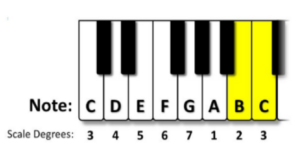
  • A musical scale is a sequence of musical notes or tones by pitch.
  • A subset of seven notes is called the minor scale and can be referred to with alphabetic names (A, B, C, etc.) or scale degrees (1, 2, 3, etc.).
  • An ostinato is a repeating musical figure (for example, 3-3-3-3-2-2).

In 2007, Marcus Gray (Flame) purchased an ostinato and used it in the song “Joyful Noise.” The song was released in 2008. While “Joyful Noise” did not achieve significant commercial success or airtime, it received millions of views online. In 2013, American singer-songwriter Katy Perry created “Dark Horse,” which was a hit, resulting in her performance at the Super Bowl halftime show in 2015.

The “Joyful Noise” ostinato consists of notes, represented as 3-3-3-3-2-2-2-1 and 3-3-3-3-2-2-2-6, whereas Dark Horse’s ostinato contains 3-3-3-3-2-2-1-5. Both have a uniform rhythm and equal note duration in time.

Plaintiffs sued Perry and her co-defendants for copyright infringement. Plaintiffs presented circumstantial evidence that the defendants had a reasonable opportunity to access “Joyful Noise” and that the ostinatos in both songs were substantially similar. Plaintiffs did not present direct evidence that Perry and the others had copied elements of the song, instead relying on testimony from their expert musicologist, Dr. Todd Decker.

Decker testified that the ostinatos were similar in many aspects, but he also testified that there was no single element that caused him to believe the ostinatos at issue were “substantially similar” when viewed “in isolation.” The jury also heard testimony from Perry’s expert, who disagreed altogether that the ostinatos were substantially similar.

The jury found that the defendants had a reasonable opportunity to hear “Joyful Noise” before composing “Dark Horse,” that the two songs contained substantially similar copyrightable expression and that “Dark Horse” used protected material from “Joyful Noise.” The jury found the defendants liable for copyright infringement and awarded $2.8 million in damages. The district court vacated the award and granted judgment as a matter of law to defendants, concluding that the evidence at trial was legally insufficient to show that the “Joyful Noise” ostinato was a copyrightable original expression. The plaintiffs appealed.

The Ninth Circuit explained that because the plaintiffs did not present any direct evidence that the defendants copied the “Joyful Noise” ostinato, they were required to show that the defendants had access to the work and that the ostinatos were substantially similar.

The Ninth Circuit began with its analysis [...]

Continue Reading


read more

Copyright Claims Board Clarifies Service Rules and Opt-Outs

The US Copyright Office issued two final rules for how companies can designate agents to receive claims and how libraries can preemptively opt out of claims before the Copyright Claims Board (CCB). The agency has been drafting rules governing the CCB since it was established in 2020. The new venue is designed to serve as an alternative forum where parties may voluntarily seek to resolve certain copyright claims regarding any category of copyrighted work.

Companies Can Designate Subsidiaries as Agents of Service

Section 37 CFR § 222.6 (Designated service agents) becomes law effective April 7, 2022. This forthcoming rule will allow corporations, partnerships and unincorporated associations to use the same designated agent for process of service for separate legal entities under their direct or indirect common control. This rule will also allow companies with many subsidiaries to designate one service agent for each of its affiliates.

Libraries and Archives Can Preemptively Opt Out

Section 37 CFR § 223.2 (Libraries and archives opt-out procedures) becomes law effective April 8, 2022. Under this new law, a library or archive that wishes to preemptively opt out of participating in CCB proceedings may do so by submitting written notification to the CCB. The notification must certify that the library or archive qualifies for the limitations on exclusive rights under 17 U.S.C. 108, which provides that it is not an infringement of copyright for a library or archive, or any of its employees acting within the scope of their employment, to reproduce a single copy of a work under certain conditions.

Class Action Opt-Out Procedures

Section 37 CFR § 223.3 (Class action opt-out procedures) becomes law effective April 8, 2022. Under the new law, if a party to an active CCB proceeding receives notice of a pending or putative class action arising out of the same transaction or occurrence as the proceeding before the CCB in which the party is a class member, that party may either opt out of the class action or seek written dismissal of the proceeding before the CCB within 14 days of receiving notice of the pending class action.


read more

Paradise Lost: Art Created by AI Is Ineligible for Copyright Protection

The US Copyright Office Review Board (“Board”) rejected a request to register a computer-generated image of a landscape for copyright protection, explaining that a work must be created by a human being to obtain a copyright. Second Request for Reconsideration for Refusal to Register A Recent Entrance to Paradise (Copyright Review Board Feb. 14, 2022) (S. Perlmutter, Register of Copyrights; S. Wilson., Gen. Counsel; K. Isbell, Deputy Dir. of Policy).

In 2018, Steven Thaler filed an application to register a copyright in a work named “A Recent Entrance to Paradise.” Thaler listed as the author of the work the “Creative Machine,” a computer algorithm running on a machine. Thaler listed himself as a claimant and sought to register the work as a “work-for-hire” as the “owner” of the Creative Machine. The Board refused to register the work, finding that it lacked the necessary human authorship. Thaler requested reconsideration, arguing that the “human authorship requirement is unconstitutional and unsupported by either statute or case law.”

After reviewing the work a second time, the Board found that Thaler provided no evidence of sufficient creative input or intervention by a human author. The Board refused to abandon its longstanding interpretation of the Copyright Act, as well as Supreme Court and lower court precedent, that a work meets the requirements of copyright protection only if it is created by a human author. The Board concluded that “A Recent Entrance to Paradise” lacked the required human authorship and therefore affirmed refusal to register. Thaler filed for a second reconsideration.

The Board found that Thaler’s second request for consideration repeated the same arguments as his first request. Relying on the Compendium of US Copyright Office Practices (the Office’s practice manual), the Board found that Thaler provided neither evidence that the work was a product of human authorship nor any reason for the Board to depart from more than a century of copyright jurisprudence.

The Board explained that the Supreme Court of the United States, in interpreting the Copyright Act, has described a copyright as the exclusive right of a human and her own genius going back to 1884. The Board noted that the Supreme Court has repeatedly articulated the nexus between the human mind and creative expression as a prerequisite for copyright protection. The human authorship requirement is further supported by the lower courts. For example, in 1997 the US Court of Appeals for the Ninth Circuit held in Urantia Found. v. Kristen Maaherra that a book containing words “‘authored’ by non-human spiritual beings” can only gain copyright protection if there is “human selection and arrangement of the revelations.”

The Board further explained that federal agencies have followed the courts. In the 1970s, the National Commission on New Technological Uses of Copyrighted Works (CONTU) studied the creation of new works by machines. CONTU determined that the requirement of human authorship was sufficient to protect works created with the use of computers and that no amendment to copyright law was necessary. CONTU explained that “the eligibility of [...]

Continue Reading


read more

2022 IP Outlook Report: The Developments Shaping Copyright Law

Key Takeaways and Outlook for 2022

Like so many things in 2021, a few long-awaited copyright developments have spilled into 2022, with anticipated amendments to key provisions in the Digital Millennium Copyright Act topping the list of legislation to watch.

The key issues we are tracking include the following:

  1. Proposed Changes to the Digital Millennium Copyright Act
  2. The Fair Use Doctrine in Light of Google LLC v. Oracle America, Inc.
  3. Transformativeness in Fair Use under The Andy Warhol Foundation for the Visual Arts, Inc. v. Goldsmith
  4. Unicolors and H&M Hennes & Mauritz Face Off in SCOTUS Infringement Dispute
  5. Copyright Alternative in Small-Claims Enforcement Act: A Venue and a Less-Complex Process in Sight in 2022

Read the full report.


read more

Copyright Office Solicits Comments on Deferred Examination Option

The US Copyright Office announced a public study to evaluate the merits of providing an option to defer examination of copyright registration materials until a later request by the applicant. Deferred Registration Examination Study: Notice and Request for Public Comment, 86 Fed. Reg. 70540 (Dec. 10, 2021). To aid in the effort, the Copyright Office is soliciting public comments, which are due by January 24, 2022.

Copyright protection automatically attaches to an original work of authorship as soon as it’s created and fixed in tangible form. Although registration is optional, the US Copyright Act provides significant incentives to encourage registration, which only occurs after the Copyright Office examines the work and determines that it is copyrightable. This process can often take many months. In 2019, the Supreme Court of the United States held that a lawsuit for copyright infringement can be brought only after the Copyright Office registers the copyright. Fourth Estate v. Wall-Street.com, Case No. 17-571 (US March 4, 2019) (Ginsburg, Justice).

There is currently no option to delay or defer examination of submitted application materials. In an effort to modernize its technological infrastructure, the Copyright Office has previously solicited public input concerning the registration process. Respondents have submitted various proposals involving a deferred examination proceeding, some of which included:

  • Allowing applicants to submit application materials at a discounted fee
  • Delaying examination but still intaking information about the work into the public catalog
  • Allowing formal examination to determine whether the work should be registered at a later time for an additional fee
  • If the work is registered, attaching statutory benefits with an effective date of when the original materials were received.

Commenters have indicated that benefits of permitting deferred examination include more registrations, more timely registrations, expansion of the public record, improved efficiency by removal of the examination step, decreased processing times, lower expenses and more deposits available for the Library of Congress’s collections.

In May 2021, Senator Thom Tillis, the ranking member of the Senate Judiciary Subcommittee on Intellectual Property, sent a letter to the Copyright Office requesting a study on the feasibility, benefits and costs of creating a deferred examination option for an application, including whether an applicant can obtain an effective date of registration upon submission and deposit while choosing to defer examination until a later time. He also asked the Copyright Office to consider whether statutory changes might be necessary to enable such an option.

In order to assess the viability of including a deferred examination option, the Copyright Office is inviting written comments on various subjects, including:

  • The deficiencies in the current registration process
  • The potential benefits and drawbacks of a deferred examination option
  • The possible legal or regulatory framework for the option
  • The impact of such an option on the Copyright Office, the Library and the ability to bring a lawsuit based on Fourth Estate
  • Whether the same goals that deferred examination is meant to achieve could be accomplished through alternative [...]

    Continue Reading


read more

STAY CONNECTED

TOPICS

ARCHIVES